











-
Photonic Component Analyzers
Precision instruments for optical characterization and analysis

-
Coherent Transmission Tests
Coherent test solutions for validating complex modulated optical transceivers

-
Photonic Test Parts
Photonic test tools for scalable, automated optical validation
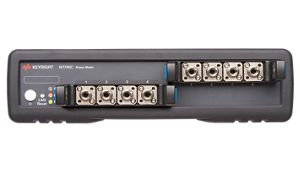


Photonic Component Analyzers
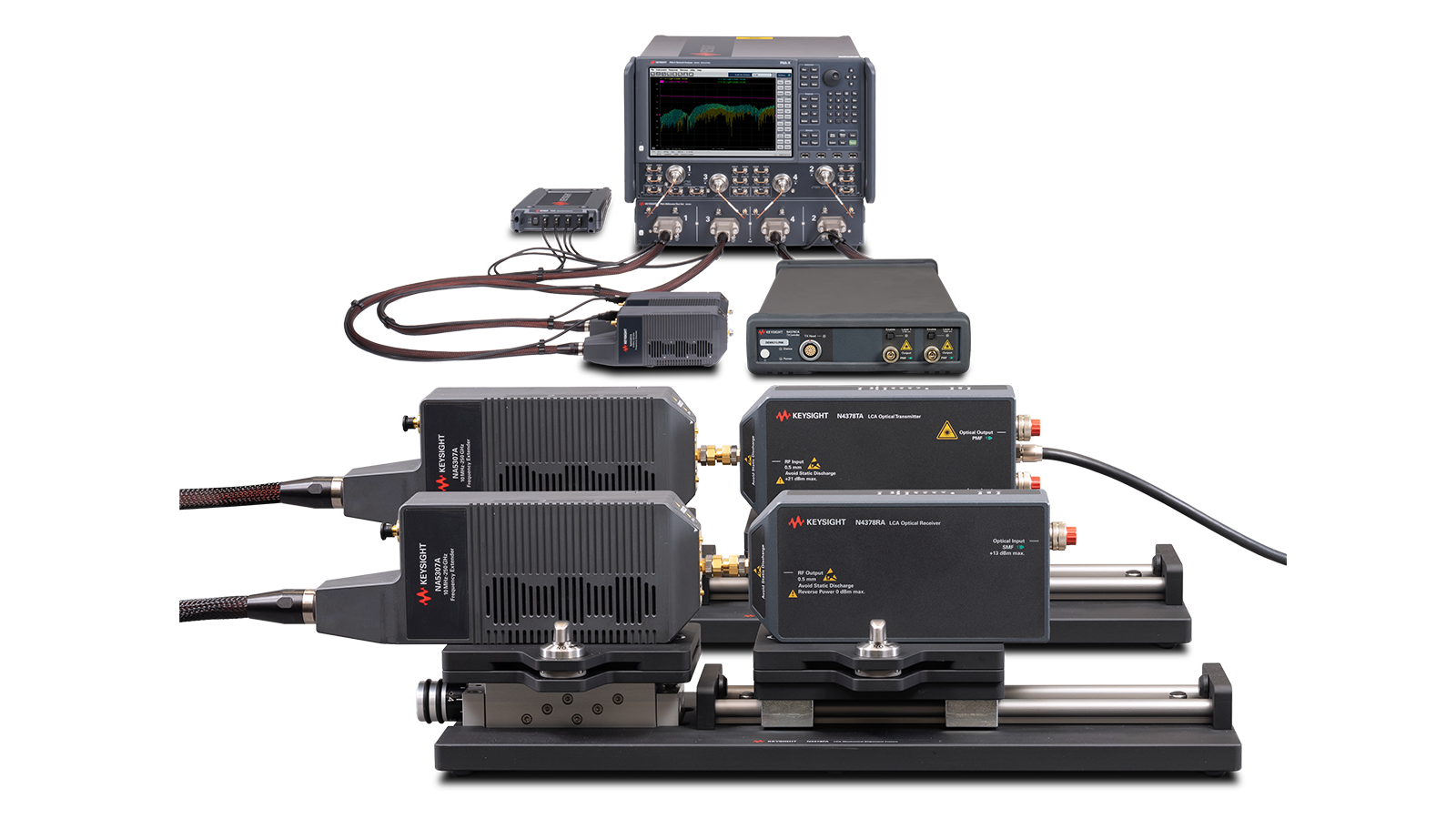
Keysight photonic component analyzers include the XP1-, XP2-, XP3-, XP4-, XP5-, and XP6-class. They support complex characterization and validation across a wide range of optical components and systems. Designed for precision, accuracy, and flexibility, these solutions help you uncover critical insights into optical performance, ensuring your designs meet today’s demanding requirements. Explore our wide range of photonic component analyzers to find the one that is right for your application.

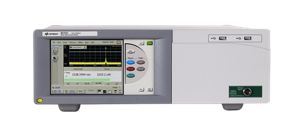


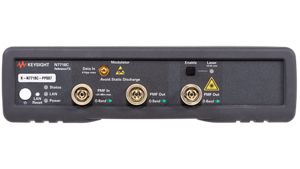


Coherent Transmission Tests
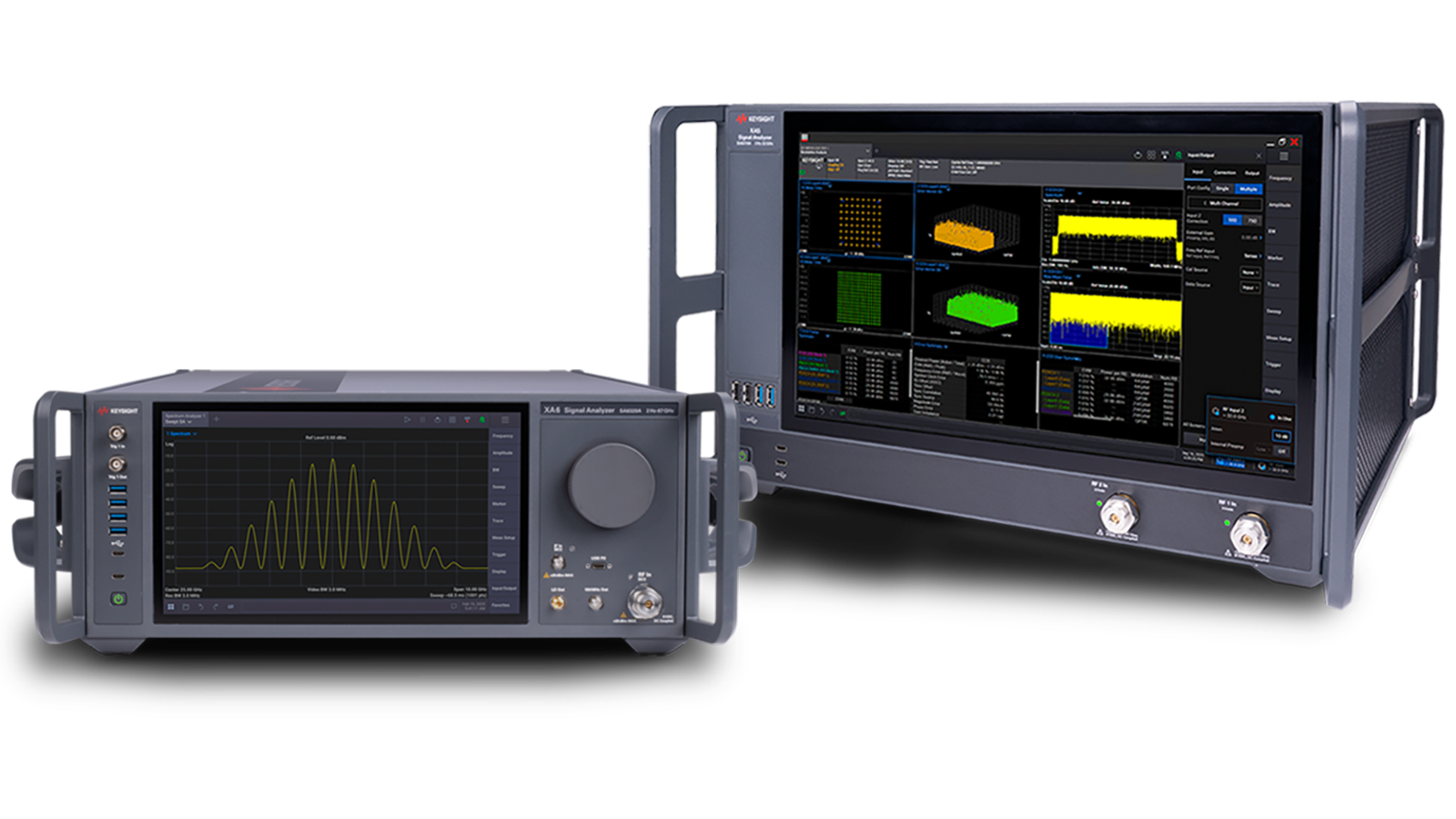
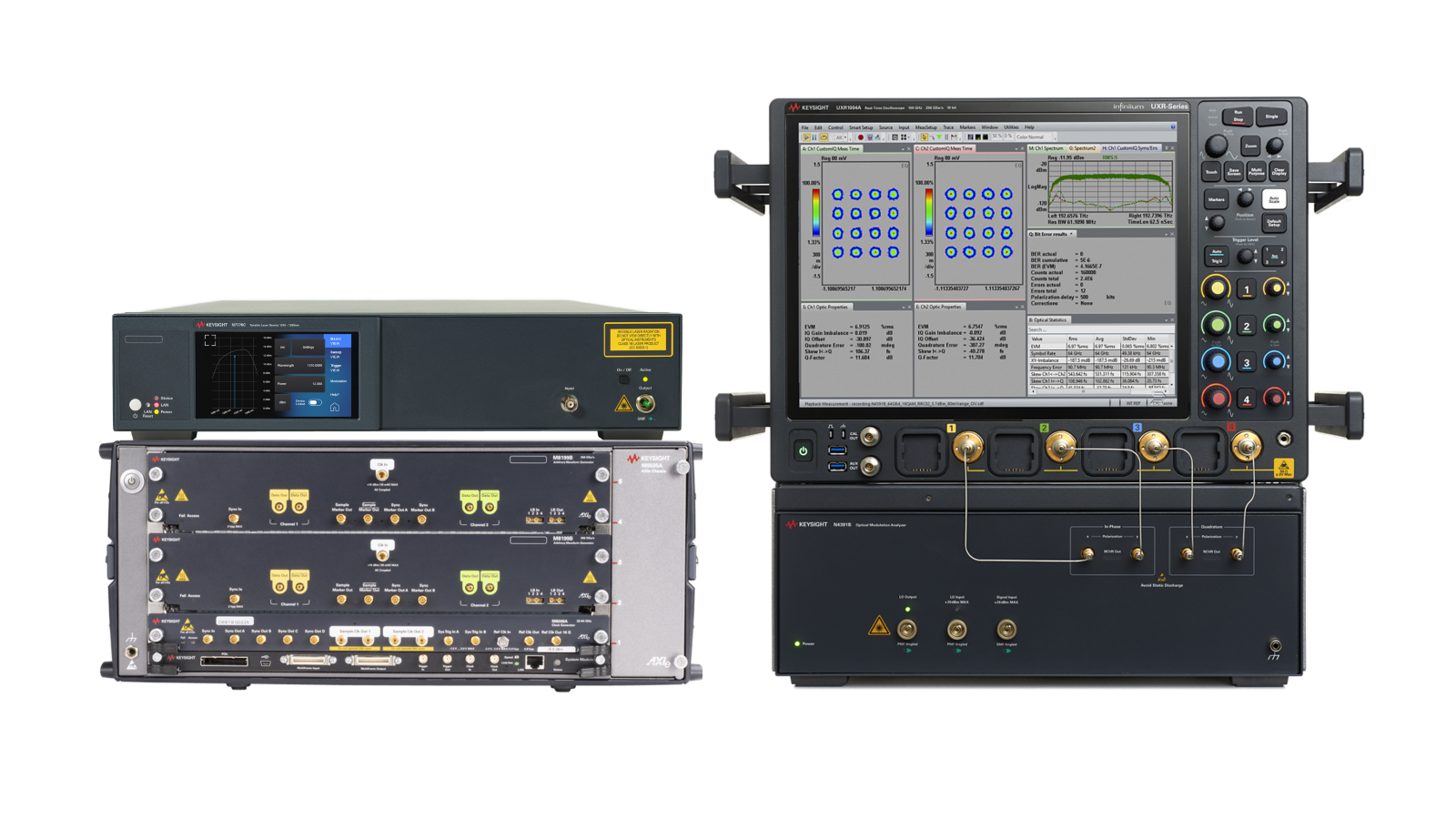
Keysight coherent transmission test products include XP7-class optical modulation analyzers and modular options. They enable you to characterize long-range optical transmitters and validate coherent transceivers and systems used in high-speed data center networks. Measure modulated optical signals with high fidelity to analyze performance metrics such as error vector magnitude (EVM), Q-factor, and phase error for compliance with industry standards. Choose from a wide range of solutions including high-frequency analyzers based on our Pro Benchtop Oscilloscopes, or modular coherent transmission test solutions, available in various bandwidths and channel configurations to match your application requirements. Explore our broad portfolio to find the right configuration for your development, validation, or manufacturing testing needs.


Photonic Test Parts
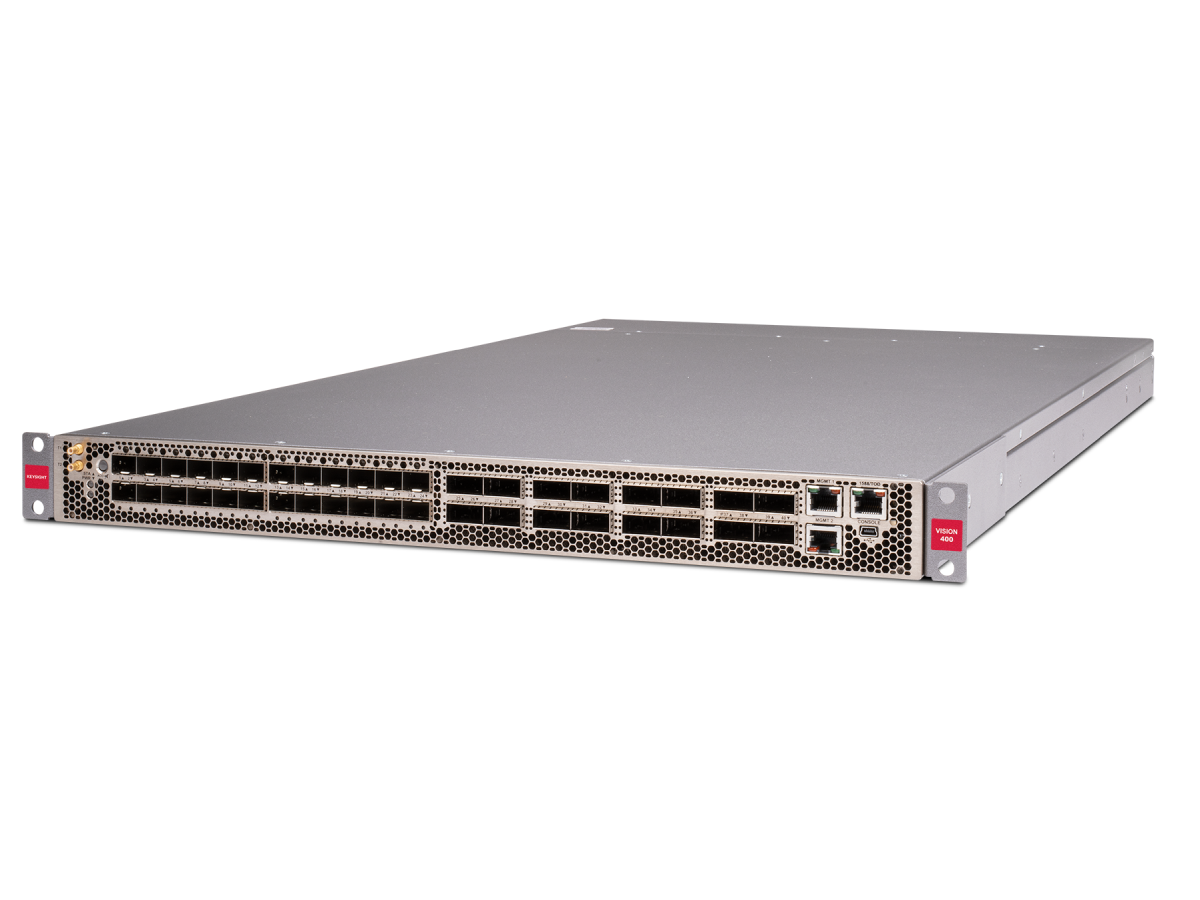
Keysight photonic test parts are designed to help you develop reliable, efficient, and scalable test systems for a wide range of optical applications. Whether you're developing next-generation components or validating complex networks, our comprehensive portfolio supports precise, high-performance testing at every stage. Explore our wide range of photonic test parts you need to build the optical test environment that meets your requirements today and into the future.


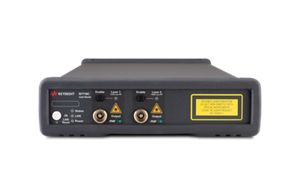

Find the lightwave component analyzer for you in minutes
Find compatible software and accessories for photonic and optical testing
Choose from a wide-range of test and measurement solutions to accelerate the progress of next-generation intelligent optical networks, including automation and analyze software or accessories like cables and connectors.
Explore photonics and optical test use cases
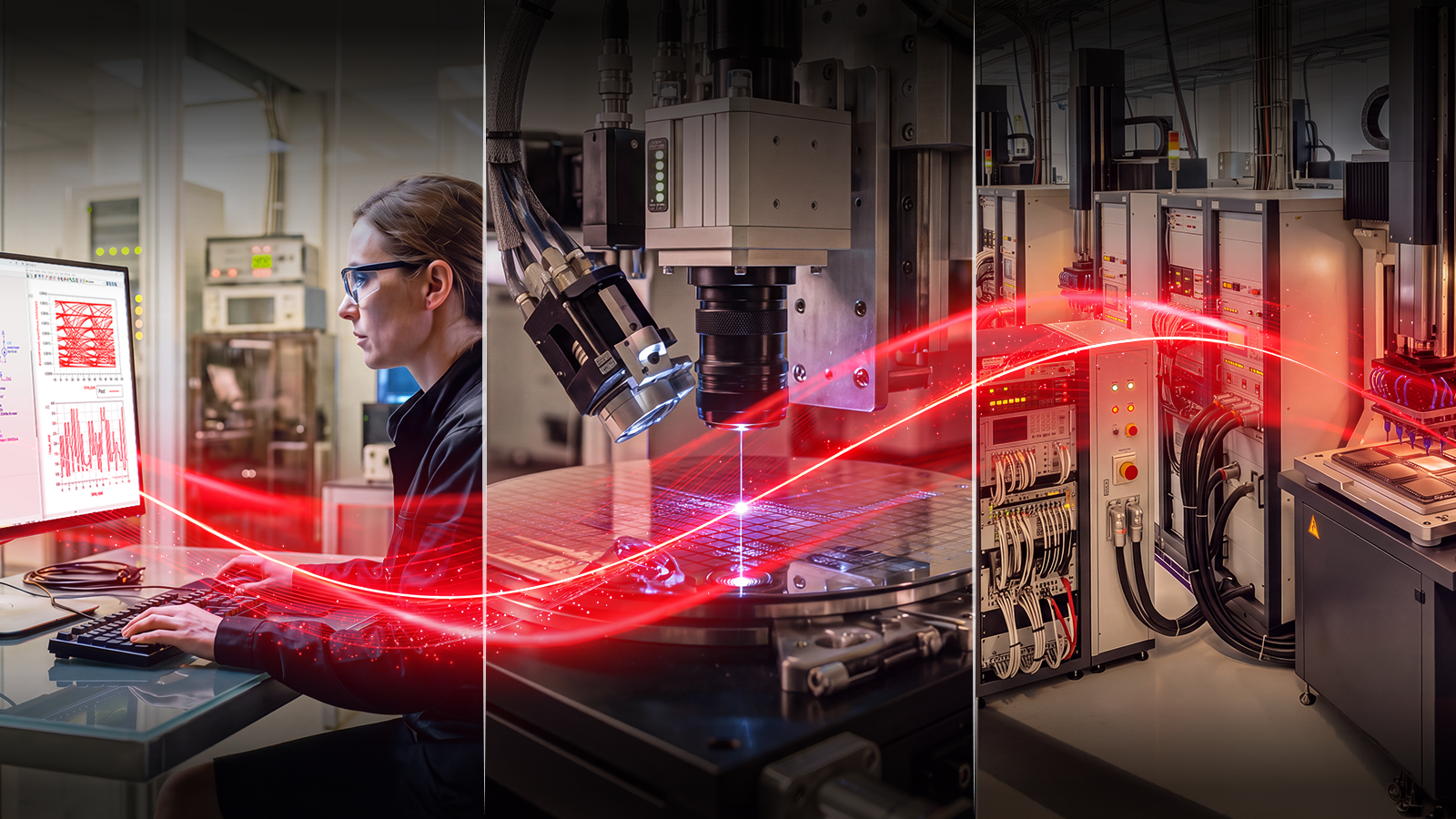
Optical test solutions support a wide range of measurements across various industries, discover them all.
Semiconductor
How to Characterize Silicon Photonics Electro-Optical S-Parameters
Characterize electro‑optical S‑parameters of silicon photonic devices in wafer‑ and chip‑level test environments.
Automotive
How to Automate Wafer‑Level Optical Power Sweeps for Silicon Photonics
Automate wafer‑level optical power sweeps for silicon photonics device characterization with high repeatability.

Wired Communication
Analyze EVM and BER to characterize optical transmitter performance and validate high‑speed coherent transceiver designs.

Services and support
Innovate at speed with curated support plans and prioritized response and turn-around times.
Get predictable, lease-based subscriptions and full lifecycle management solutions—so you reach your business goals faster.
Experience elevated service as a KeysightCare subscriber to get committed technical response and more.
Ensure your test system performs to specification and meets local and global standards.
Make measurements quickly with in-house, instructor-led training, and eLearning.
Download Keysight software or update your software to the newest version.
Frequently asked questions
Choosing a photonic and optical test solution begins with identifying the validation level (component, module, subsystem, or full link) and the development phase, such as R&D, system validation, or manufacturing. Component workflows emphasize wavelength accuracy, optical power, insertion loss, and spectral response, while system workflows focus on modulation quality, noise tolerance, and transmission impairments. Data rate, modulation format, channel count, and automation requirements further define solution needs. Engineers typically select test solutions that align measurement capability and calibration rigor with performance risks at each stage of development, validation, or production.
Photonic component analyzers are used to characterize individual optical elements such as lasers, modulators, filters, and photonic integrated circuits by measuring wavelength-dependent behavior, loss, polarization effects, and stability.
Coherent transmission test systems validate end‑to‑end optical links using complex modulation formats, assessing performance metrics such as EVM, Q‑factor, BER, and OSNR under realistic transmission conditions.
Photonic test parts, including optical power meters, attenuators, switches, and calibrated references, support accurate, repeatable setups by controlling signal levels and routing in laboratory and manufacturing environments.
Photonic and optical testing measures parameters that define signal accuracy, quality, and robustness across components and systems. At the component level, common measurements include optical power, wavelength accuracy, spectral shape, insertion loss, return loss, and polarization effects. For high‑speed and coherent systems, testing extends to error vector magnitude (EVM), Q‑factor, bit error ratio (BER), optical signal‑to‑noise ratio (OSNR), phase noise, and timing‑related impairments. These measurements help engineers quantify modulation fidelity, noise margins, and compliance with performance specifications throughout development and production.
In high‑speed data center and coherent optical communication validation, photonic and optical test systems emulate real transmission conditions while measuring performance limits. Engineers use them to validate transceivers, line cards, and optical engines operating at 400G, 800G, and emerging higher rates. Testing focuses on verifying modulation accuracy, tolerance to noise and dispersion, and interoperability with network elements. These systems enable stressed‑signal testing, margin analysis, and compliance verification before deployment into hyperscale and long‑haul optical networks.
Accuracy in photonic and optical measurements depends on traceable calibration, stable signal sources, and controlled test setups. Engineers ensure reliability by using calibrated optical references, compensating for path loss, and maintaining clean optical connectors to minimize reflections and drift. Signal integrity is preserved through proper bandwidth selection, clock alignment, and noise management across optical and electrical interfaces. Regular verification routines and automated calibration workflows help maintain measurement consistency across labs, production lines, and long‑term product development cycles.