What are you looking for?
Illumination Fundamentals Training with JMO Illumination Optics
Course Description
This online instructor-led training portfolio provides engineers with a practical, measurement-driven understanding of illumination optics. Courses emphasize first-principles analysis, system feasibility, and design decision-making for modern LED-based illumination systems.
Software demonstrations are provided by the instructor. Attendees are not required to own optical design software unless otherwise noted.
Colorimetry for LED Users
This three-day online short course covers what engineers in illumination optics need to know to quantify color, with special emphasis on LEDs.
A basic working knowledge of optics is assumed.
Key Learning Outcomes
- CIE color spaces and chromaticity metrics
- Additive color mixing and LED binning concepts
- Color Rendering Index (CRI) interpretation and limitations
- Color difference metrics and spatial color uniformity
Intended audience: Optical and illumination engineers working with color-critical LED systems.


Understanding Light for Illumination


DATE/TIME
June 22, 24, 26, 29, 30 and July 2, 6, 8, 10, 2026 | 8:00–11:00 a.m. PDT (9 sessions)
LOCATION
Online
This online short course explains the deep, beautiful, and immensely useful theory of light for illumination.
Practical exercises and examples are an integral part of the course. They show how the theory lets us see what can or cannot be done in illumination optics, and how the same theory guides us towards viable solutions.
A basic working knowledge of optics is assumed.
Key Learning Outcomes
- Étendue and phase-space concepts
- Relationships between flux, intensity, illuminance, and luminance
- Determining feasibility from first principles
- Applying theory to real-world illumination challenges
Intended audience: Engineers and designers seeking a deeper understanding of illumination fundamentals.
Modeling Sources and Optical Systems in Illumination Optics
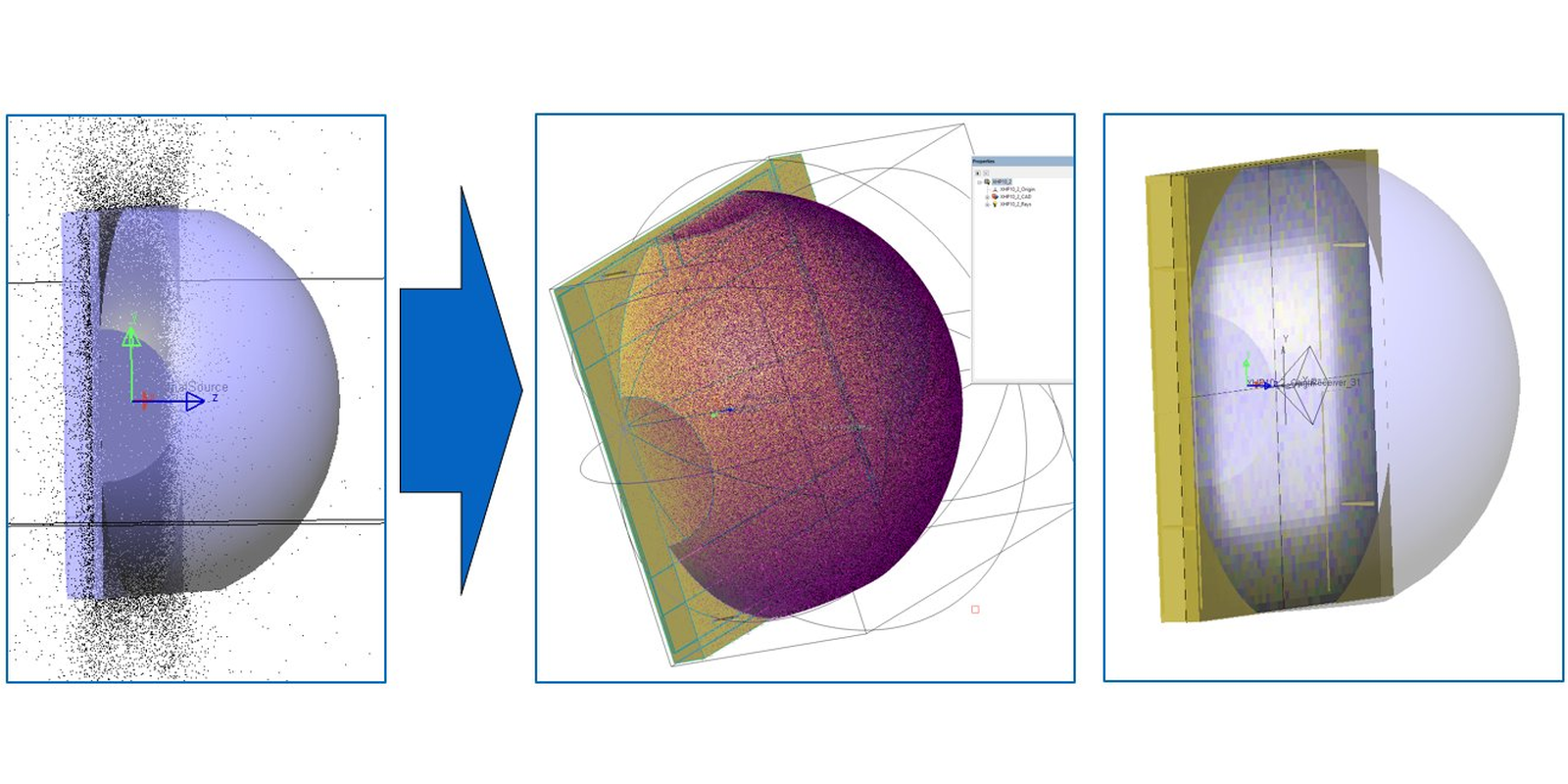
This online short course shows engineers in illumination optics how to model LEDs and other sources in illumination design software, how to work with ray data files, and how to get their ray-tracing models right.
The optics concepts covered in our course “Understanding Light for Illumination" would be helpful, but are not required.
Key Learning Outcomes
- Selecting appropriate light source models
- Interpreting LED ray files and spectral data
- Monte Carlo ray-tracing fundamentals
- Balancing simulation accuracy and complexity
Intended audience: Illumination and optical engineers responsible for simulation-driven design.

Optical Elements for Illumination

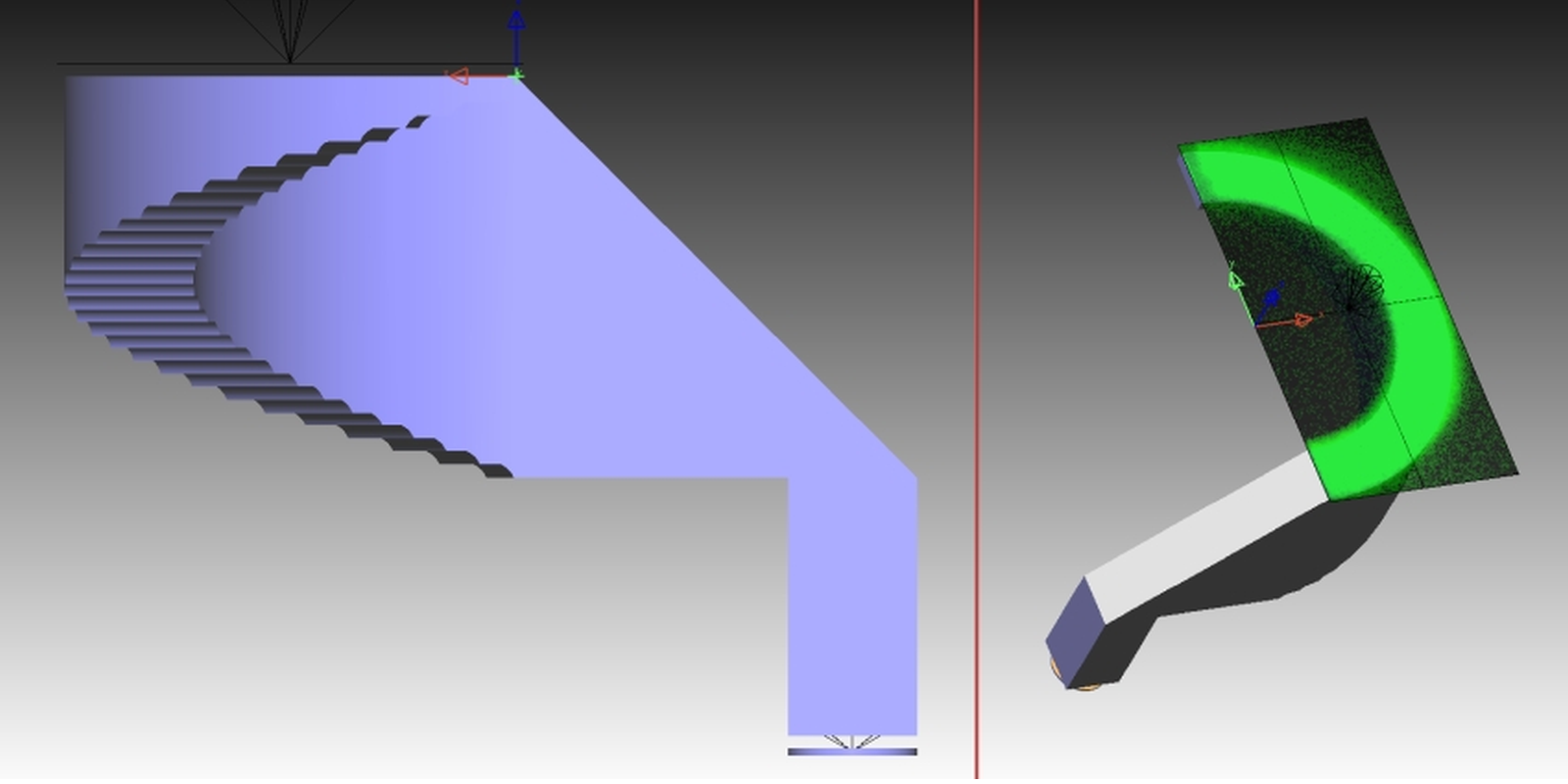
This three-day online short course introduces “design patterns” in illumination optics: building blocks as reusable solution approaches to recurring problems. TIR lenses, faceted mirrors, micro lens arrays, mixing rods, CPCs, Köhler illumination and more are explained by what they do to the light, and how to combine them.
The optics concepts covered in our course “Understanding Light for Illumination" would be helpful, but are not required.
Key Learning Objectives
- TIR lenses, reflectors, and CPCs
- Mixing rods and microlens arrays
- Köhler illumination principles
- Combining elements for robust system designs
Intended audience: Designers selecting and integrating optical elements in illumination systems.
Freeform Optics for Illumination
This four-hour online short course introduces participants to the art of designing freeform optics for illumination: surfaces without translational or rotational symmetry that can efficiently create desired illuminance distributions. The course will explain how freeform surfaces “work”, and show which degrees of freedom, and which limitations, are inherent to the design process. Practical examples will be shown and explained.
Key Learning Outcomes
- How freeform illumination surfaces work
- Design freedoms and constraints
- Limitations with extended sources
- Guidance from solved examples
Intended audience: Experienced optical designers working on advanced illumination applications.


About the Instructor
Julius Muschaweck is an internationally recognized expert in illumination optics with more than 20 years of industry experience. His background includes senior technical leadership roles at OSRAM and ARRI, extensive work in freeform optics, and authorship of numerous publications and patents.
Testimonials
"I highly recommend the illumination course taught by Julius Muschaweck. His deep knowledge of illumination and his expertise in implementing optical designs, combined with his passion to teach, make him a perfect instructor. He translates illumination concepts into conceivable real-life examples. During the virtual sessions, he did a great job keeping all course participants engaged by using technology that allowed him to switch smoothly between lecture notes, a virtual whiteboard, and illumination software. I’m glad I had the opportunity to take his course."
- Shohreh Shadalou, Ph.D. Candidate, Optical Science and Engineering, The University of North Carolina at Charlotte
“Julius Muschaweck’s course provides an excellent overview of illumination fundamentals and applications. Julius is an expert in illumination optics and is an excellent teacher. He did a fantastic job of breaking down and presenting complex concepts for students with a wide range of previous experience and educational backgrounds. In addition, Julius is extremely well versed in software and modeling of illumination systems. I learned a number of practical new tips and tools for using LightTools in the course.”
- Dr. Thomas Suleski, Professor of Physics and Optical Science, University of North Carolina at Charlotte
"I had the chance to attend the course "Modeling sources and Systems for Illumination" given by Julius Muschaweck and I really enjoyed it! My favorite part of the course was the one about ray files and the available set ups in LightTools to use them properly. Julius is really good at making all the students comfortable to ask their questions and to give very clear and complete answers. I would recommend this course to anyone curious and passionate with the field of illumination optic design."
- Gabrielle Grondin, Optical Designer, Lumenpulse