
Resource Guide
Waveform Generator Vs Arbitrary Waveform Generator



Introduction
Have you ever tried to recreate a real-world signal only to hit limits in bandwidth, distortion, or modulation flexibility? Many engineers run into this when troubleshooting complex designs or validating new hardware. Precision signal generation shapes how quickly you find faults, verify performance, and move from prototype to production.
Modern testing often demands signals that a basic waveform generator can’t produce. When you need custom shapes, advanced modulation, or precise timing control, an arbitrary waveform generator gives you the accuracy and flexibility to model real conditions and isolate issues faster.
If you’ve ever wondered whether your current generator can match the signal fidelity your design requires, or why subtle waveform details influence measurement outcomes, you’re already thinking in the direction this guide covers. Mastering AWG capabilities helps you run cleaner tests, reduce debugging cycles, and support more complex applications without additional hardware.
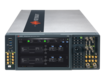
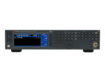
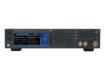
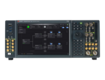
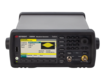
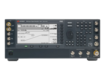
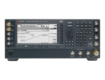
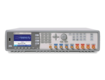
Overview of Arbitrary Waveform Generators
An arbitrary waveform generator (AWG) is a programmable signal source that produces custom, user-defined waveforms with precise control over amplitude, timing, and modulation.
A standard function generator, by comparison, outputs a fixed set of basic shapes such as sine, square, and triangle waves. When engineers need signals that match real-world operating conditions or stress devices in controlled ways, an AWG delivers the flexibility and fidelity a function generator cannot.
AWG technology evolved as digital communication, radar, and semiconductor systems demanded cleaner, faster, and more complex signals. Early generators served analog circuits well. Modern applications require high sample rates, deep memory, and advanced digital-to-analog conversion to shape detailed waveforms. These improvements turned AWGs into essential tools across R&D labs and production environments.
Adoption continues to rise across telecom, automotive, aerospace, and semiconductor testing. Engineers value AWGs because they can recreate conditions that traditional sources cannot.
Here’s how different sectors use them:
- Telecom: Engineers emulate 5G and 6G waveforms, stress receivers, and validate modulation performance.
- Automotive: Teams generate radar chirps, sensor-simulation signals, and timing patterns used in ADAS development.
- Semiconductor labs: Engineers characterize high-speed logic devices, study timing behavior, and run stress tests on advanced ICs.
- Aerospace: Researchers simulate complex communication and navigation signals that require high fidelity and long waveform sequences.
In each case, an AWG removes uncertainty by producing detailed, repeatable signals that reflect real operating environments.
A few fundamentals are important across all applications. Signal fidelity depends heavily on sample rate and vertical resolution. Memory depth defines how long or detailed a waveform can be. And as systems become more complex, multi-channel synchronization becomes essential for accurate multi-signal testing. For a deeper look at these concepts, you can visit our internal Signal Generator Buying Guide.
Quick comparison: AWG vs function generator
| Feature | AWG | Function generator |
|---|---|---|
| Purpose | Complex, programmable, application-specific waveforms | Standard analog waveforms |
| Waveform flexibility | High — fully customizable | Low — fixed built-in shapes |
| Signal fidelity | High — fine control over resolution and timing | Moderate — suited for general tasks |
Technical Specifications and Features Comparison
To choose the right AWG, it helps to understand the key specs that influence signal quality: sample rate, vertical resolution, memory depth, bandwidth, and voltage range. These parameters affect how well the generator reproduces real-world signals and how easily it integrates into your broader measurement setup.
Core Specifications That Define AWG Performance
- Sample rate: Sample rate dictates how many data points the generator produces per second. Higher rates allow you to recreate fast edges, high-frequency modulation, and RF-relevant waveforms. Keysight’s lineup spans from tens of MSa/s (33522B) to tens of GSa/s (M8196A).
- Vertical resolution: Vertical resolution determines how many bits are used per sample. Higher resolution reduces quantization noise and improves low-amplitude accuracy, which is essential for semiconductor testing, precision analog work, and quantum applications.
- Memory depth: Memory depth determines how long and how detailed a waveform sequence can be before repeating. Applications like radar chirps, long PRBS sequences, and high-speed serial patterns require deep memory to avoid truncation.
- Bandwidth: Bandwidth limits the highest usable frequency content your waveforms can contain. Matching it to your DUT’s requirements ensures accurate reproduction of fast transitions or RF envelopes.
- Voltage range: A flexible output voltage range simplifies integration with oscilloscopes, analyzers, DUTs, and amplification stages.
Keysight AWG Model Comparison
| Model | Sample Rate | Analog Bandwidth | Channels | Memory Depth | Vertical Resolution | Output Voltage |
|---|---|---|---|---|---|---|
| 33522B (Trueform) | 250 MSa/s | 30 MHz | 2 | 1 MSa/ch (optional expansion | 16-bit | 1 mVpp to 10 Vpp (high impedance) |
| M8190A-002 (12 GSa/s AWG) | 12 GSa/s | Up to 5 GHz | 1–2 | 512 kSa | 14-bit | Up to 1.2 Vpp (higher with amplifiers) |
| M8190A-U01 | 12–14 GSa/s | Up to 5 GHz | 1–2 | Up to 2 GSa/ch | 14-bit | Same as above |
| M8196A-001 (92 GSa/s AWG) | 92 GSa/s | 32 GHz | 1 (per module) | 65 GSa | 8-bit optimized for ultra-high-speed | Up to ~1 Vpp |
(Specs reflect official Keysight data sheets for each product family.)
Model-by-Model Summary
33522B (Trueform)
A dual-channel 30 MHz generator designed for precision low-frequency and general-purpose work. It features Trueform technology for lower jitter and better spectral purity than traditional DDS sources. Ideal for education labs, device bring-up, and analog circuit characterization.
M8190A Series (002 & U01 variants)
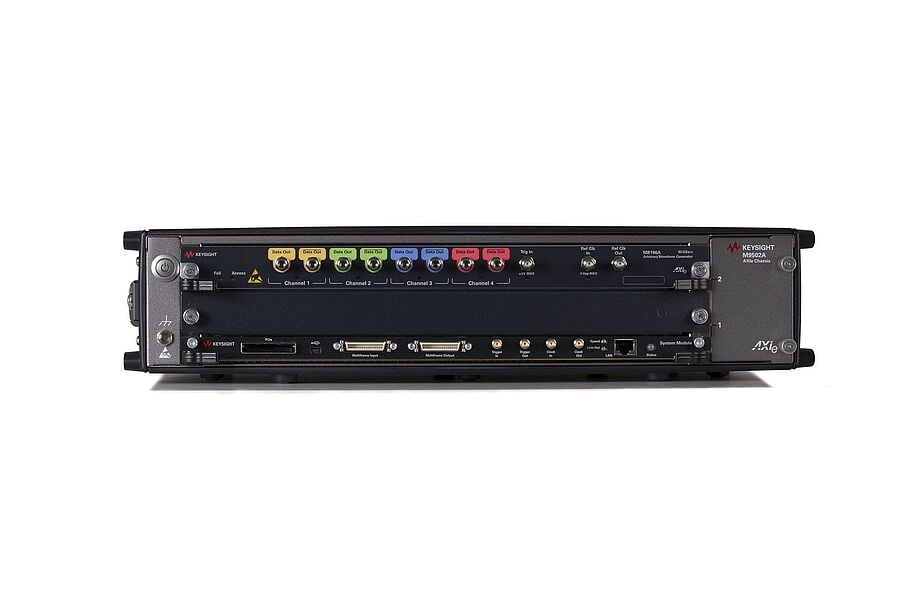
A flagship high-performance AWG delivering up to 12–14 GSa/s and 14-bit resolution. Known for exceptionally low jitter, high dynamic range, and deep memory. Used heavily in semiconductor research, advanced modulation testing, coherent optical work, and high-speed digital validation.
M8196A-001
One of the fastest AWGs commercially available, reaching 92 GSa/s with 32 GHz analog bandwidth. Optimized for 100G/400G/1T communications research, coherent optical modulation, ultra-wideband radar, and advanced physics experiments.
Unique Features That Matter in Practice
Multi-channel synchronization
For radar, high-speed serial, and multi-antenna testing, synchronized channels, especially on the M8190A, ensure precise phase alignment and coherent modulation.
Advanced modulation capabilities
Higher-end Keysight AWGs support complex digital patterns, I/Q modulation, wideband chirps, envelope shaping, PRBS sequences, and custom stress testing without external modulators.
Software workflow integration
Keysight PathWave and waveform-editing tools simplify sequencing, memory management, and automated test generation. Integration with Python, MATLAB, and LabVIEW helps engineers shorten setup times and automate repeatable test flows.
How to Evaluate AWG Specs for Your Needs (Steps)
- Define your highest required frequency (this dictates sample rate and bandwidth).
- Estimate waveform length and complexity to determine required memory depth.
- Identify how many channels must be phase-aligned for your application.
- Match vertical resolution to the precision your DUT needs.
- Check integration requirements: software control, triggering, and existing bench instruments.
Tips for Reading Technical Data Sheets
- Focus on typical rather than maximum performance values.
- Verify SFDR, jitter, THD, and noise floor, especially for analog-sensitive work.
- Note any sample-rate vs. memory trade-offs.
- Confirm software support for waveform sequencing and automation.
Interpreting data sheets this way helps you understand how the instrument will behave in day-to-day testing rather than under idealized lab conditions.
Common Mistakes to Avoid
- Selecting an AWG based only on sample rate without checking bandwidth.
- Underestimating memory requirements for long modulation sequences.
- Ignoring synchronization specs when multiple channels are needed.
- Overlooking software ecosystem compatibility, which can add hidden setup time.
Avoiding these pitfalls ensures you choose an AWG that performs as expected when integrated into a real engineering workflow.
Advantages and Limitations of Arbitrary Waveform Generators
Arbitrary waveform generators offer a level of precision and flexibility that standard function generators simply cannot match. When your testing requires exact timing, advanced modulation, or realistic signal recreation, an AWG becomes one of the most valuable instruments on the bench. Understanding both the strengths and the limitations helps you choose when an AWG is the right tool and when a simpler generator may be enough.
Advantages of AWGs in Engineering Work
AWGs excel at waveform customization, letting you build signals that mirror real operating environments. Whether you’re recreating noisy power-rail behavior, modeling radar chirps, or generating advanced 5G modulation, you can shape every detail of the waveform.
They also support multi-channel operation, which is essential for MIMO testing, synchronized radar outputs, and high-speed digital validation. When paired with oscilloscopes, analyzers, and switching systems, they integrate smoothly into automated test setups. This flexibility reduces time spent stitching together multiple instruments and helps teams build consistent, scalable workflows.
In many engineering contexts, an AWG provides situational advantages over other signal sources. RF engineers can generate coherent I/Q waveforms without needing separate modulators. Semiconductor teams can stress devices with long, non-repeating PRBS sequences or capture edge-case timing behaviors. Automotive and aerospace labs rely on AWGs to simulate sensor data, replicate environmental noise, and validate system robustness long before physical prototypes are available.
Limitations and Challenges to Consider
The biggest trade-off with AWGs is cost. Advanced models offer exceptional performance but may exceed what smaller labs or simple test cases require. Their expanded feature sets also introduce complexity. Engineers new to AWGs sometimes underestimate the learning curve associated with waveform sequencing, triggering schemes, or memory management.
Regular calibration helps maintain waveform accuracy, which adds maintenance planning to long-term use. In addition, AWGs require a certain level of skill to operate effectively. Creating precise signals often requires an understanding of sample rate, aliasing, interpolation, and spectral behavior.
Common Misconceptions and How They Affect Testing
A frequent misconception is that higher sample rate alone guarantees better results. In reality, bandwidth, jitter performance, and vertical resolution influence signal fidelity just as strongly.
Another misunderstanding is assuming the AWG can replace every modulation or RF source. While extremely versatile, AWGs still need appropriate filtering, amplification, and synchronization to produce optimal results.
Why These Features Matter for Application Success
When you can match real-world conditions with accuracy, you reduce debugging time and reveal issues earlier in development.
Deep memory ensures long, high-resolution waveforms don’t repeat prematurely. Multi-channel synchronization allows engineers to test multi-signal systems with the timing precision modern designs demand. And software integration helps streamline everything from waveform design to automated test execution.
In short, AWGs provide the flexibility and fidelity engineers need when accuracy is central to product performance. Understanding both their capabilities and limitations helps you deploy them where they deliver the most value.
Scientific and Industry Research Supporting AWG Use
Arbitrary waveform generators play a central role in device validation because many modern test methodologies require controlled, repeatable, and high-fidelity signals.
Published studies rarely focus on AWGs as standalone subjects. However, engineering literature and industry standards frequently reference them. Their applications include validating communication systems, characterizing semiconductor devices, and evaluating advanced modulation schemes. The ScienceDirect overview of arbitrary waveform generators summarizes many of these applications and highlights why AWGs appear so frequently in experimental setups.
AWGs are widely used in research involving signal integrity, high-speed digital interfaces, and RF system evaluation. In these studies, researchers rely on AWGs to introduce precise impairments, generate modulation formats such as QPSK and QAM, and recreate real-world channel conditions.
Their ability to generate controlled distortions makes them essential for validating device tolerance and confirming compliance with expected performance margins. In semiconductor characterization, AWGs serve as pattern sources for evaluating switching behavior, edge timing, and analog-to-digital transitions.
Industry standards also implicitly require AWG-level capabilities. Specifications in high-speed serial standards, radar testing methodologies, and advanced wireless communication protocols depend on waveform generators that meet defined fidelity, timing, and modulation requirements. While these documents do not endorse specific instruments, the testing procedures they outline often cannot be performed using a simple function generator.
Key research findings on waveform accuracy and fidelity
- Reproducible arbitrary waveforms are essential for evaluating device response under controlled test conditions.
- High sample rate and adequate vertical resolution directly influence measurement repeatability in communication and semiconductor studies.
- Deep memory enables long, non-repeating test sequences required for validating digital interfaces and modulation formats.
These findings align with the questions engineers often raise during validation: Can the waveform source introduce known impairments accurately? Will the test remain stable across long sequences? Can the generator match the modulation requirements of the standard being tested?
Research case examples commonly show AWGs used to generate wideband radar signals, emulate wireless channel conditions, or drive high-speed DAC/ADC validation loops. In each scenario, the AWG provides the deterministic control needed to isolate device performance from signal-source limitations.
Real-World Applications and Case Studies
Arbitrary waveform generators support some of the most demanding test environments across telecom, automotive, and semiconductor labs. Engineers rely on them because they can reproduce real operating conditions with the timing accuracy and waveform detail needed to validate next-generation designs.
Telecom Network Validation
Telecom engineers use AWGs to generate wideband modulation schemes, recreate 5G and early 6G signal structures, and evaluate receiver performance under controlled impairment scenarios.
Because AWGs can inject jitter, phase noise, or distortion on demand, they allow teams to test devices against real-world challenges without relying on live network conditions. This repeatability speeds regression testing, simplifies root-cause isolation, and provides predictable workflows across evolving standards.
Automotive Radar Testing
In automotive R&D, AWGs generate precise FMCW chirps and high-frequency modulation profiles used in radar and ADAS development. Engineers adjust ramp linearity, sweep bandwidth, and timing structure to mirror the conditions radar sensors face on the road. This controlled testing helps detect subtle performance issues early and improves overall system reliability long before vehicles undergo track or field validation.
Semiconductor Characterization
Semiconductor labs depend on AWGs to drive high-speed digital patterns, timing-sensitive analog signals, and long PRBS sequences into devices under test. Deep memory and high sample rates allow researchers to observe switching behavior, verify timing margins, and study signal-integrity effects across voltage and temperature sweeps.
Calibration plays an important role in maintaining measurement confidence, and many teams refer to our Calibration Certificates Guide to confirm performance stability over time.
These experiences offer practical lessons. AWGs reduce dependencies on external fixtures or modulators, simplify multi-instrument setups, and give teams a controlled source for repeatable test conditions. They also make it easier to scale from benchtop prototypes to automated production workflows because the same waveform files, scripts, and timing structures can be reused across systems.
How to Choose the Right Arbitrary Waveform Generator
Choosing an AWG becomes easier when you map your technical requirements directly to the instrument’s core specifications. Every application places different demands on bandwidth, memory depth, channel count, and overall budget. The right choice depends on the signals you need today and how your testing may evolve in the future.
Key Factors to Consider
- Bandwidth: Determines whether the AWG can accurately reproduce the highest frequency components of your waveform. Always match the instrument’s bandwidth to the maximum frequency content of your application and leave headroom for future expansion.
- Memory depth: Affects how long and how detailed your signals can be before repeating. Long radar sweeps, wideband communication patterns, PRBS sequences, and custom modulation files often require deep memory to maintain waveform integrity.
- Channel count: Matters when synchronizing multi-signal systems, such as radar transmit/receive tests, MIMO structures, or high-speed digital interfaces. Phase-coherent channels allow you to model real device behavior more accurately.
- Budget: Shapes the trade-offs between performance, feature sets, and long-term value. A refurbished Keysight AWG with OEM calibration and warranty support often offers the best balance of performance and cost.
A Practical Decision Framework
- Start by defining your signal requirements, including frequency range, waveform length, and modulation complexity.
- Match those needs to core specifications such as bandwidth, memory depth, sample rate, and vertical resolution.
- Determine how many channels your tests require and whether phase alignment is necessary.
- Consider workflow factors like software tools, automation support, and compatibility with your existing bench.
- Review long-term ownership considerations, including calibration, warranty coverage, service availability, and expected lifespan.
Tips for Navigating Vendors and Warranty Options
Ask for calibration history, channel skew performance, and memory configuration details, not just headline specs. For refurbished models, confirm that the unit includes OEM calibration and a warranty long enough to cover your expected workload.
Many engineers negotiate bundled accessories (cables, software options, trigger modules) or seek units with expanded memory already installed to avoid future upgrades.
Essential Questions to Ask Before Buying
- Does this AWG meet my bandwidth and memory needs for both current and future projects?
- Are the channels phase-coherent, and do I need sequencing or advanced modulation support?
- How does the software integrate with my existing automation or data-acquisition tools?
- What warranty or calibration support is included, and who provides it?
By answering these questions up front, you ensure the AWG you choose fits your engineering requirements today while offering room for future expansion.
Integrating AWGs with Other Test Equipment
Arbitrary waveform generators become even more powerful when paired with oscilloscopes, spectrum analyzers, and other bench instruments. These combinations give engineers full visibility into how a device responds to controlled stimuli and help uncover signal integrity issues that a single instrument might miss.
When you understand how to synchronize instruments and maintain clean signal paths, you can run more reliable tests and shorten your debugging cycles. You can review our oscilloscope basics guide for a deeper look at measurement fundamentals and best practices.
Benefits of Multi-Instrument Setups
Pairing an AWG with an oscilloscope offers a direct loop for stimulus and measurement. Engineers can generate a custom signal, view it immediately on the scope, and verify its shape, timing, and amplitude before driving the device under test.
When combined with a spectrum analyzer, the AWG becomes a versatile tool for evaluating frequency-domain behavior, modulation accuracy, and unintended emissions. This combination is especially useful for RF, radar, and wireless communication development, where both time-domain and frequency-domain validation are important.
Integration Best Practices
Effective integration requires stable timing and controlled signal paths. Shared triggers or reference clocks keep instruments aligned, and good cabling with proper impedance matching preserves signal fidelity. Careful grounding reduces noise that can hide DUT behavior. In multi-channel or switching environments, documenting timing paths gives you a clear way to track down errors.
Common Mistakes That Lead to Inaccurate Results
A frequent mistake is assuming instruments are synchronized when they are not. Even small timing offsets can distort measurements or misrepresent DUT performance. Another issue arises when engineers overlook the bandwidth limitations of probes, attenuators, or cables.
If any part of the signal chain cannot support the AWG’s output frequency, test results may appear inconsistent. Using the wrong reference clock or failing to terminate lines properly can introduce jitter or amplitude variation.
Integrating an AWG with scopes and analyzers ultimately gives you a clearer picture of device behavior and helps ensure your test environment reflects real-world conditions as accurately as possible.
Getting Started with AWGs: Setup and Basic Operation
Setting up an arbitrary waveform generator for the first time is straightforward once you understand the basic workflow: configure the instrument, create or load a waveform, and verify the output before connecting it to your device under test.
Most modern Keysight AWGs provide intuitive interfaces, clear navigation menus, and helpful soft keys, so beginners can move from setup to signal generation quickly.
Setup Checklist
- Connect the AWG and measurement instruments using high-quality coaxial cables, confirming proper impedance (typically 50 Ω).
- Select the output channel, set the amplitude and offset, and choose the desired load configuration.
- Import or create a waveform using the front-panel editor or a software tool such as PathWave or a waveform editor.
- Enable output and verify the signal on an oscilloscope before applying it to the DUT.
User Interface Tips
Most Keysight AWGs offer quick-access menus for amplitude, frequency, and waveform shape. Use the touchscreen or rotary knob to fine-tune parameters, and rely on built-in presets for common signal types.
For more advanced models, shortcuts such as “Copy Channel,” “Zero Offset,” or “Normalize Amplitude” help speed up configuration. If the AWG supports USB or LAN waveform uploads, keep frequently used files in organized folders for faster recall.
Common Beginner Pitfalls
New users often forget to match the output impedance to the measurement setup, which can distort amplitude readings. Others overlook the relationship between sample rate and waveform length, resulting in unintended resampling or aliasing. It’s also easy to leave the output disabled after editing parameters, leading to confusion when no signal appears on the scope.
With these fundamentals in place, beginners can move confidently from first-time setup to generating reliable, application-ready waveforms.
Conclusion
Arbitrary waveform generators give engineers the control, precision, and flexibility needed to validate modern designs with confidence.
By focusing on the right mix of bandwidth, memory, channels, and workflow integration, you can select an AWG that supports both current projects and future requirements. The more you experiment with waveform sequencing, modulation tools, and multi-instrument setups, the easier it becomes to uncover device behavior and streamline your testing process.
If you're looking for reliable performance without the cost of new equipment, the Keysight Used Equipment Store offers Premium Used AWGs and companion instruments such as oscilloscopes and network analyzers. Each unit is OEM-calibrated, backed by a warranty, and supported by experts who understand your testing challenges.
Whenever You’re Ready, Here Are 5 Ways We Can Support Your Capacitor Projects
Call tech support US: +1 800 829-4444
Press #, then 2. Hours: 7am – 5pm MT, Mon– Fri
Contact our sales support team
Create an account to get price alerts and access to exclusive waitlists
Talk to your account manager about your specific needs.
Frequently Asked Questions
An AWG creates precise, customizable electrical signals. It lets engineers design or import waveforms that match real operating conditions, making it easier to test how a circuit or device reacts under specific scenarios.
A function generator outputs basic shapes like sine, square, and triangle waves. An AWG can produce those same signals plus complex, user-defined waveforms with far greater control over timing, resolution, and modulation.
Focus on sample rate, bandwidth, memory depth, vertical resolution, channel count, and software integration. These determine how detailed, fast, and long your generated signals can be.
AWGs support standard waveforms as well as custom shapes, long sequences, PRBS patterns, radar chirps, I/Q signals, and application-specific modulation formats.
Yes, many AWGs can generate RF-relevant signals, modulation envelopes, and wideband waveforms. Applications often include wireless, radar, and high-speed digital testing.
Higher sample rates improve waveform accuracy, support higher bandwidth, and reduce distortion. They’re essential for fast edges, wideband modulation, and high-frequency signals.
Higher resolution improves signal detail, while deeper memory allows longer, non-repeating waveforms — crucial for radar sweeps, communication patterns, and stress testing.
Most AWGs offer AM, FM, PM, pulse, I/Q, and custom digital modulation options, depending on the model.
They provide phase-coherent outputs for synchronized, multi-signal testing — useful for MIMO, radar, and multi-lane digital validation.
Yes. AWGs can recreate noisy power rails, environmental disturbances, sensor outputs, and complex modulation profiles to validate designs under realistic conditions.