
When Design Data Becomes a Liability (and What to Do About It)
When design data becomes a liability, productivity suffers. Discover how Keysight SOS simplifies IP management and boosts engineering efficiency.
Try Keysight Data Management Software (SOS)
Key takeaways:
- Design data and intellectual property (IP) management are critical functions that facilitate efficient engineering lifecycle management for chips.
- However, efficient design data and IP management face many challenges.
- Keysight Data Management (SOS) software addresses these challenges.
A chip designer not only has to solve tough electronic problems, but they also have to worry about development process issues like:
- Where's the latest version of a schematic?
- Am I overwriting another engineer's changes?
- Does this vendor's chiplet comply with industry standards?
Such questions about version control, IP metadata, and design data can further slash productivity in an industry that's already worried about it due to growing design complexity.
At Keysight, we help semiconductor innovators accelerate time-to-market and reduce risk by giving them complete control over their design data and IP workflows. Our SOS platform is purpose-built to meet the demands of modern chip complexity — no matter the application.
In this article, we shine a spotlight on efficient design data management and IP integration with chip engineering lifecycle management (ELM) to optimize productivity and time-to-market.
Why are chip design data and IP management so important?
In our earlier post on semiconductor engineering lifecycle management, its scope and responsibilities were depicted as shown in the illustration below.
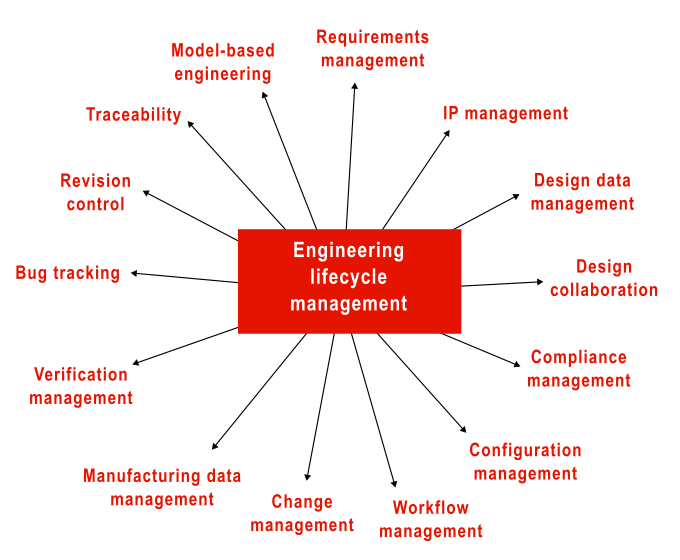
Figure 1. Scope of engineering lifecycle management
Among these, design data management (DDM) provides a single centralized source of truth for all information about every integrated circuit (IC), system-on-chip (SoC), or chiplet.
IP management is a subset of DDM that focuses on tracking the use of IP blocks in a company's designs.
These two aspects are critical for effective ELM because all the other functions depend on them. Let's look into these dependencies in detail.
Design collaboration
Systematic design data management is critical for efficient collaboration between all the research, development, simulation, and verification teams that are often globally distributed. For every item stored in the DDM, features like issue tracking, revision control, and thorough documentation are equally critical and must be facilitated by the DDM's workflows.
Model-based systems engineering
The shift-leftsystems design approach encourages engineers to identify and mitigate all issues — like chip heating and electromagnetic interference — as early as possible by simulating them.
One of DDM's important responsibilities is the preservation of all the simulation models, test plans, results, and documentation over the entire development lifecycle.
Change management
Modern SoCs are layered hierarchies consisting of dozens of smaller ICs, each with complex design, simulation, and verification procedures. Whenever any constituent circuit is changed, it may have adverse effects on other parts of the SoC or the overall performance. So, tracking all design or performance dependencies and cascading automated verification sequences for them is an essential responsibility of DDM and IP management.
Requirements, traceability, and configuration management
All the requirements, specifications, and engineering change requests of a chip must be captured and searchable — from its earliest inception stages until end-of-life — to preserve institutional memory and past knowledge about its design decisions. Equally crucial is the systematic tracking of the lineage of every component in the chip's hierarchy so that all stakeholders can find out exactly which component version was used in each chip version.
The DDM facilitates such knowledge management.
Compliance management
Every jurisdiction and industry imposes regulations and standards that restrict the design space of chips. Regulations related to sanctions, arms trade, and defense procurement restrict technology transfers to or from other countries. Sustainability regulations may restrict materials and manufacturing techniques. Additionally, these rules change often.
For remaining compliant throughout a chip's lifecycle, the DDM and IP management facilitate granular compliance and IP usage tracking at all stages.
What are some common data and IP management challenges in the semiconductor industry?
Good design data and IP management must not only facilitate all the above ELM responsibilities but do so accurately, efficiently, and securely to maximize engineering productivity. As early as 2013, McKinsey had observed that the increasing complexityof chip design was reducing development productivity and increasing engineering costs. The situation now is even worse due to challenging demands from the downstream industries.
Semiconductor companies must exploit every possible optimization in their product development to maximize productivity. To do so, their engineering lifecycle management solutions must overcome several challenges outlined below.
Scalability issues due to high data volumes

Figure 2. Chip design data volumes
The first big hurdle is the sheer size of chip design data. Each SoC design and variant requires 1-2 terabytes of storage. Managing so much data with speed and responsiveness complicates the storage, network transfer, and version control implementations.
Version control challenges
Common version control systems (VCS), like Git, are not ideal for chip design. They don't implement version control in ways that are optimized for the chip design ecosystem. Some common challenges are listed below:
- Performance bottlenecks: As mentioned above, typical project sizes are in the terabyte range. Storage and network optimizations are necessary to achieve speed and responsiveness for checking out, committing, and comparing changes.
- Inefficient integration with design tools: Common VCS tools are not seamlessly integrated with the electronic design automation (EDA) tools and workflows that design, simulation, and test engineers use. This creates daily productivity friction.
- Lack of concurrent editing: Common VCS tools are designed for text files. If two engineers simultaneously edit the same text file, their changes are easy to merge. In contrast, editing chip schematics and layouts is more like working on images. The VCS must have domain knowledge and geometrical granularity to enable concurrent editing of such data.
- Poor binary file handling: Large binary files are common in chip design. Regular VCS tools don't enable engineers to seamlessly visualize, compare, and merge them.
IP reuse obstacles
Reusing pre-designed and pre-verified IP cores can significantly speed up the chip engineering process. However, challenges include:
- finding the right IP core that satisfies various functional, performance, and cost requirements
- evaluating all their simulation and test results
- verifying their security and regulatory compliance requirements
Siloed knowledge
The semiconductor industry's culture of need-to-know secretiveness to protect intellectual property can lead to knowledge silos even within a company. An engineering team may already know a lot about a particular IP core, but the silo culture prevents that precious knowledge from organically spreading to other project teams and increasing overall productivity.
Documentation challenges
Chip design involves plenty of internal and partner documents like:
- datasheets
- interface specifications
- performance specifications
- simulation guides
- physical synthesis and layout guidelines
- release notes
- compliance reports
- licensing and non-disclosure agreements
Each of these may have multiple versions. Finding and retrieving the exact document and version that a designer needs requires highly capable document management and information retrieval features.
Inefficient manual processes
Many companies continue with inefficient manual workflows for design change reviews, approvals, IP discovery, collaboration, procurement, and more.
What are some common engineering challenges in automotive chip design?
Automotive chip design involves additional challenges like these:
- Long operational lifetimes: The average lifespan of cars in the U.S. is about12 years. All the chips inside must also operate for such durations, possibly under harsh road and weather conditions.
- Stringent safety culture: The automotive safety culture remains very stringent and accountable. Even older models sold for years are regularly checked for faults over their entire product lifecycle and recalled if necessary. This requires the vehicle and part manufacturers, including chip companies, to build up long institutional memories by systematically retaining past knowledge of their designs and decisions.
- End-to-end traceability: Standards like the International Organization for Standardization 26262 functional safety specifications require automotive chips to maintain end-to-end traceability between requirements and verification stages.
What are some common engineering challenges in chip design for 5G/6G telecommunications?
Similarly, chips used in 5G/6G antennas, base stations, core switches, and non-terrestrial networks are mixed-signal devices that involve both radio frequency IC and high-speed digital IC designs. Data and IP management for such mixed-signal designs involve various unique challenges listed below:
- Mixed-signal designs can't be easily managed by regular global configuration management systems.
- Design workflows are more complex with several tools from multiple vendors. Version control is usually not integrated.
- The inherent complexity of analog IC design encourages poor practices like copying designs between scratch and master libraries, manual revision control, and disabled access controls. However, such practices can easily result in errors, data loss, and overall inefficiency.
How do Keysight SOS address chip ELM challenges?
To address all these challenges, Keysight offers a dedicated design data management and IP management platform for semiconductor companies. Let's understand how they address all the above challenges of semiconductor engineering lifecycle management.
Comprehensive design data management

Figure 3. Keysight SOS
Keysight SOS stores — in a centralized project repository — all the requirements, specifications, intermediate design files, tapeout files, technical documents, embedded software development, simulation models, test management, legal documents, and regulatory reports related to a chip design. They can be from internal teams and partner companies.
All this engineering data can be arranged under subsystems and components in a natural hierarchy for convenient management. Granular access control is supported through user roles, groups, and permissions per user per item.
Efficient multi-site design collaboration
By centralizing the storage, Keysight SOS becomes a single source of truth for a chip design. All teams across the world see the same files and versions.
Engineers download a project's files to workspaces on their workstations. Even if the design is a couple of terabytes, this is an extremely fast operation that downloads only a few kilobytes. Keysight SOS uses various copy-on-write and caching strategies to minimize disk consumption on engineers' workstations. It downloads only what's needed but also keeps the workstations in perfect sync with the central repository whenever any changes are made.
Integrated version control

Figure 4. SOS version control integrated with an EDA tool
Versions are shown in the Keysight SOS user interface. Version control is also seamlessly integrated into EDA tools like:
All teams around the world can answer questions like these in real time:
- Which subsystems or components have changed?
- Who is currently working on a particular cell, schematic, or layout?
- What is the latest version of an item?
- Which version is in my workstation?

Figure 5. Visual highlighting of design changes by Visual Design Diff (VDD)
In addition, Visual Design Diff enables engineers to see the changes made in a schematic or layout graphically. It also generates impact analysis reports to keep schematic and layout engineers in sync.
High-performance architecture
The speed and responsiveness of Keysight SOS are due to a unique architecture with highly optimized storage and network resource usage. It consists of the following:
- Cache servers: The central repository is mirrored by cache servers at each design site. The cache servers sync themselves with the repository over high-bandwidth network connections.
- Lightweight symbolic links: When an engineer downloads a project, instead of downloading terabytes of files, only lightweight symbolic links to them are created on the workstation. Each link references the relevant file in the local cache server. This is completely transparent to the EDA tools, the operating system, and the user. They can see and work with the links as if they're normal files on a local disk.
- Copy-on-write strategy: Only when an engineer checks out a file for editing is it downloaded to the workstation.
- Incremental updates: To avoid heavy uploads, large binary files are uploaded to the cache server incrementally.
Streamline your chip engineering lifecycle management
In this blog, we showed how design data and IP management are critical for high-quality semiconductor ELM, the challenges therein, and their mitigations by Keysight's software.
Contact us for engineering insights into streamlining your chip design processes.