
The Advanced RF Engineering Behind Next-Generation SATCOM
Key takeaways:
SATCOM systems are up against a large number of unique natural, technical, and business challenges that other radio frequency (RF) systems don't face.
Next-generation SATCOM involves advances in beam steering, modulation, antenna design, optical communication, and more.
Launching a satellite is expensive! All these advanced systems need to be thoroughly tested on the ground long before the launch countdown starts. Keysight provides the systems to do so.
How are satellites improving communications?
By the end of this decade, smartphones will never be out of range. You'll be able to call your loved ones wherever they are — on a cruise ship in the ocean, driving in the middle of nowhere, or hiking up a high mountain.
This leap in communication reach and speed is thanks to advances in satellite communications (SATCOM). In our previous article on satellite communications, we introduced some of the basics of SATCOM systems and their applications.
In this blog post, we go deep into the technologies that are enabling next-generation SATCOM.
What are the main capabilities that SATCOM enables?
When should you seriously consider SATCOM as a solution? Although SATCOM often means more expenditure and operational complexity, it also offers the compelling benefits outlined below:
- Global connectivity: SATCOM enables connectivity over vast distances — especially in remote areas without terrestrial infrastructure — for long-term projects like better government administration, smart power grids, climate change monitoring, and weather forecasting.
- Low-latency broadband services: While SATCOM has traditionally been associated with high latency and low bandwidth, recent advances like constellations of low Earth orbit (LEO) satellites, electronically scanned array (ESA) antennas, and optical inter-satellite links enable fast internet, conferencing, and broadcasting at high bandwidths (5-200+ megabits per second) and low latencies (25-100 milliseconds).
- Mobile network expansion: Satellite-based non-terrestrial networks expand the reach of 5G/6G mobile connectivity to remote areas, maritime platforms, and aerospace vehicles.
- Real-time data sharing: SATCOM enables real-time data sharing from and to anywhere on Earth, which is crucial for internet of things (IoT) sensor monitoring, disaster management, and emergency responses.
- Resilient situational awareness: For critical battlefield, defense, and early warning systems, SATCOM offers real-time situational awareness as well as resiliency and redundancy.
- Control over autonomous vehicles: SATCOM enables real-time remote control and monitoring of autonomous land vehicles, aircraft, drones, and maritime vessels.
The rest of this post goes into the radio frequency (RF) engineering behind these capabilities.
What are the key components of a SATCOM system, and how do they function together?
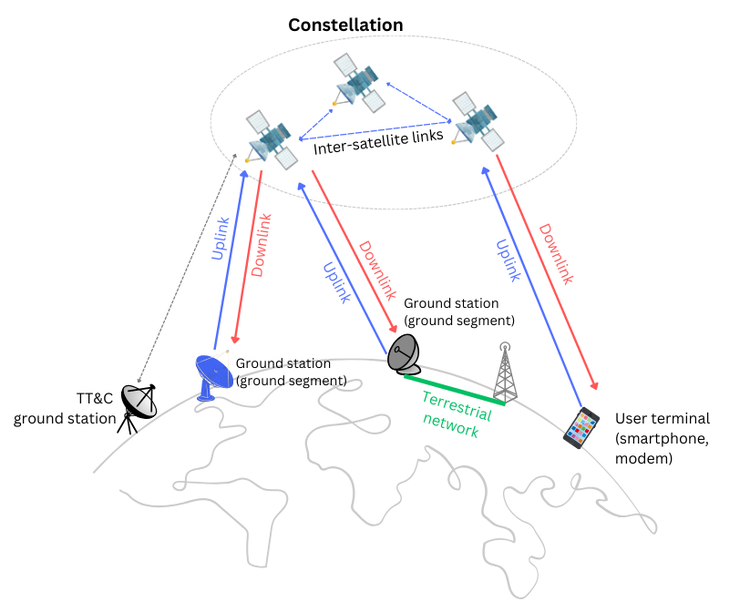
Figure 1. SATCOM system components
The key components of a SATCOM system are shown above. They include:
- Communication satellites: Satellites orbit the Earth at various altitudes to facilitate communications.
- Satellite constellations: Many SATCOM systems consist of multiple satellites orbiting in close proximity and networked with each other. These are called constellations.
- Ground stations: Some ground stations are for telemetry, tracking, and command (TT&C) of the satellites. Others are part of the terrestrial network serving the main purpose of the satellites.
- Uplinks: These are the communication links directed from ground stations or user terminals toward the satellites.
- Downlinks: These are the links directed from the satellites down to the ground stations or user terminals.
- Antenna systems: The transceivers of the ground stations and satellites use different types of antennas to send and receive RF signals.
- Inter-satellite links: The constellations form satellite networks to talk with each other through optical or RF inter-satellite links.
What are the main challenges faced by SATCOM systems?
RF design for SATCOM systems must overcome several natural and technical challenges explained below.
Atmospheric effects

Figure 2. Attenuation due to absorption by water at 22.3 gigahertz (GHz) and oxygen at 1-300 GHz
The atmosphere's composition, motion, and weather effects, like rain, result in signal interference, attenuation, and delays.
Interference effects include signal propagation delays, depolarization, refraction, diffraction, and multipath fading. These result in latency, attenuation, and signal degradation.
Clouds, rain, motion of atmospheric layers, and absorption by elements also result in attenuation. Water vapor absorption attenuates frequencies in the K-band around 22.3 GHz, and oxygen does it to the Q-band frequencies around 60 GHz.
RF engineers must account for all these effects in their link budget calculations.
Ionospheric disturbances
Signals crossing the ionosphere undergo variable delays that lead to significant transmission delays, particularly for geostationary Earth orbit (GEO) satellites.
Another phenomenon is scintillation, which is the rapid fluctuations in amplitudes and phases as signals pass through the ionosphere ionized by solar radiation.
These disturbances can be mitigated using techniques like diversity reception or frequency hopping.
Doppler shifts
LEO satellites orbit at velocities of 17,000+ miles per hour (mph) and medium Earth orbit (MEO) satellites at 7,200+ mph. At these speeds, the stretching and compression of signal frequencies (Doppler effect) can be significant.
Since SATCOM uses multiple channels and complex modulation to maximize bandwidth utilization, the channel transmission and reception must dynamically adjust to the Doppler shifts through real-time tracking and advanced modulation schemes. All this calls for careful link budget considerations and sophisticated receiver designs.
Sophisticated antenna designs
The phenomena we have seen above require sophisticated antenna and transceiver designs. ESAs can dynamically adjust to fast-moving LEO satellites through beam steering that adapts to changing satellite positions while maintaining signal strength and integrity.
Modulation schemes
For efficient bandwidth utilization and high data rates, complex modulation schemes like amplitude and phase-shift keying (APSK) are gaining favor. They minimize the peak to average ratios of the signal to allow power amplifiers to run more efficiently.
Also, end-to-end latency can go up due to the additional processing required for these schemes. So, efficient coding and hybrid automatic repeat request strategies are needed to reduce latency.
Regulatory compliance
The RF environment is getting crowded by the large LEO constellations. SATCOM systems must manage spectrum interference, particularly in bands where terrestrial and satellite services overlap. They must also comply with evolving standards set by regulatory bodies.
How do different types of satellites and their orbits impact SATCOM services?
In addition to the above factors, the orbits also have profound impacts on SATCOM design and services. GEO satellites exhibit the pros and cons below:
- Costs: The typical altitude of about 35,786 kilometers (km) allows as few as three satellites to cover most of the Earth's surface. Since they maintain a fixed position relative to the surface, tracking is not necessary. The antennas can be simpler parabolic ones at both ends. However, launching the satellites to those altitudes blows up the costs.
- High latency: The roundtrip latency of about 240 milliseconds (ms) makes them less suitable for low-latency applications. Keep in mind that the power required to transmit to a GEO from the ground is higher compared to other orbits.
- Limited capability: They need precise propulsion for station-keeping, which requires significant energy and higher operational costs.
- MEO satellites exhibit the traits below:
- Lower latency: MEO satellites have lower latencies compared to GEO systems. They are suitable for medium-latency uses like global navigation and text communication.
- Coverage costs: Global coverage requires relatively more satellites (typically eight to 20). They are generally smaller than GEO satellites, making them less expensive to launch and maintain. They can also accommodate more varied payloads.
- LEO satellites have the pros and cons below:
- Lowest latency: LEO satellites have the lowest latency, making them suitable for high-speed internet and broadband communications like mobile networks.
- Constellation requirements: Due to their low altitudes and high speeds, a constellation of LEO systems is needed for continuous global coverage. This increases the number of satellites required, the complexity of satellite design, antenna design, and operations.
- Shorter lifespans: They have shorter operational lifespans (typically five to 10 years) compared to GEO satellites. This means more frequent launches.
How does frequency band selection influence SATCOM performance?
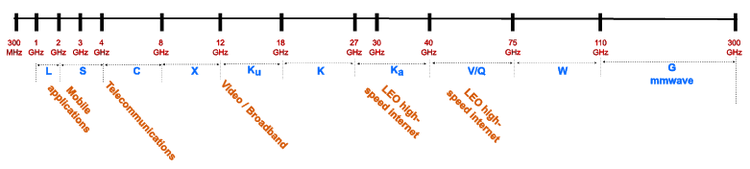
Figure 3. SATCOM frequency bands and applications
The operating frequency band of a SATCOM system plays a crucial role in its design and performance. Some important impacts of frequency band selection are outlined below.
Propagation characteristics
Each frequency band has unique propagation characteristics that affect signal strength and quality.
- L-band (1-2 GHz): It offers good penetration through foliage and buildings, making it suitable for mobile applications. However, the bandwidth is too low for high data-rate applications.
- C-band (4-8 GHz): Its resilience against rain fade and atmospheric absorption makes it suitable for telecommunication but is hampered by its narrow bandwidth.
- Ku-band (12-18 GHz): More bandwidth makes it suitable for video and broadband applications. Its antennas are smaller. However, it is affected by rain fade.
- Ka-band (26.5-40 GHz): Its wide frequency range enables very high data rates and bandwidths. However, atmospheric absorption by water vapor affects some frequencies badly. So it's more suited to LEO satellites since they have less atmosphere to traverse.
- Q-band (40-75 GHz): Again, the wide frequency range enables very high data rates, but oxygen absorption at 60 GHz is a major concern.
Antenna design
Antenna design becomes critical at higher frequencies. Dish antennas of GEO satellites are effective in the C and Ku bands where pointing accuracy is more manageable. However, their large sizes and need for precise fixed alignment make them unsuitable for fast-moving LEO satellites. The latter require fast tracking and phased array antennas.
The ability of phased arrays to steer beams electronically allows them to maintain connections despite the high velocities of the moving satellite. Control over beam width and directivity is particularly critical at higher frequencies.
Higher frequencies
Advanced satellite capabilities, such as those in digital video broadcasting, exploit higher frequency bands (like Ka) for increased data throughput while ensuring robust error correction mechanisms. This is crucial for maintaining quality of service over lossy channels.
RF pipeline advances
RF power amplifiers for higher frequency bands must be designed to the non-linear effects to ensure consistent output power without degradation in signal quality.
RF pipelines operating in the Ka-band must handle rapid changes in atmospheric conditions. The adaptive bandwidth usage and error correction required can be handled by software-defined satellites.
What role does SATCOM play in modern military and defense operations?
SATCOM, when paired with intelligence, enables real-time situational awareness, early-warning defense systems, and global navigation. It allows control of autonomous military aircraft, gathering of image intelligence, and battlefield awareness using an array of LEO, MEO, and GEO satellites.
The United States Department of Defense (DoD) and the U.S. military plan to put powerful SATCOM terminals in the hands of soldiers and commanders that facilitate:
- coordination across domains between ground, air, and orbital systems for comprehensive operational integration
- beyond-line-of-sight reconnaissance, targeting, and tracking
- communication resilience in challenging environments where terrestrial networks are unavailable or vulnerable
- real-time sharing of large volumes of real-time data for operational effectiveness
- detection of interference in complex electromagnetic environments
How are advancements in SATCOM technology changing the industry?
In this section, we review some of the key recent advances in SATCOM.
High-throughput satellites (HTS)
HTS achieve very high-capacity datalinks in the Ka and V bands. They have surged in importance as demand for higher bandwidths and broader connectivity has increased.
The key enabling technologies of HTS are large constellations of LEO satellites, electronically steerable phased array antennas, advanced modulation, and optical inter-satellite links.
Since they combine many channels onto a single transponder, they have to monitor wider bandwidth signals. They also have to manage multiple carriers, each using different modulation formats and symbol rates within different satellite bands.
For these reasons, HTS use artificial intelligence and machine learning to adapt to dynamic conditions.
HTS must be able to send large volumes of data within a short period. This requires wider transponder bandwidths of up to 1 GHz of spectrum.
Advanced modulation techniques
The exponential increase in demand for higher bandwidths and expanded reach of communication networks requires advanced modulation strategies that optimize spectrum usage to carry more data.
Modern SATCOM employs advanced techniques like QAM where both amplitude and phase are manipulated to optimize signal transmission. Higher-order schemes like 16QAM and 64QAM increase the number of bits transmitted per symbol while also resisting signal impairments.
Due to the nonconstant envelope of QAM, minimizing the effects of nonlinear amplification is a priority. Techniques like APSK are being adopted because they have a lower peak to average ratio, and are therefore more resilient to nonlinear distortion.
Orthogonal frequency-division multiplexing (OFDM) is gaining favor due to its high spectral efficiency. Since OFDM's high peak-to-average power ratios (PAPR) can strain power amplifiers, offset and differential quadrature phase shift keying (QPSK) are used to reduce PAPR without affecting the modulation.
Phase noise is another critical factor impacting signal integrity, particularly in higher-order schemes like OFDM. Testing using instruments with excellent phase noise performance is essential.
Optical inter-satellite links (OISLs)
OISLs enable very high data transmission speeds of 100+ gigabits per second. This is critical for the working of high-speed global internet access via LEO satellite constellations.
Steering mirrors maintain precise pointing to reduce energy losses. Unlike RF systems, they don't suffer signal degradation. OISLs enable mesh networks in constellations to route data dynamically based on network conditions.
They also offer more security against eavesdropping and jamming.
Phased array antennas
Phased arrays use many small patch antenna elements that are phase-controlled to form a desired beam pattern without the mechanical complexities of traditional antennas. They are critical components of high-bandwidth LEO SATCOM.
Active ESAs (AESAs) are a type of phased array where each antenna element is connected to its own transmit-receive module. This allows multiple beams to be formed simultaneously for fast and precise electronic beam steering.
They integrate RF circuits with digital processing capabilities in a single module to optimize the design and improve performance.
How does Keysight facilitate SATCOM design and testing?
Keysight provides a complete portfolio of hardware and software systems that enable end-to-end testing and simulation of all aspects of your SATCOM system long before lift-off. We feature two key systems here.
Keysight SystemVue
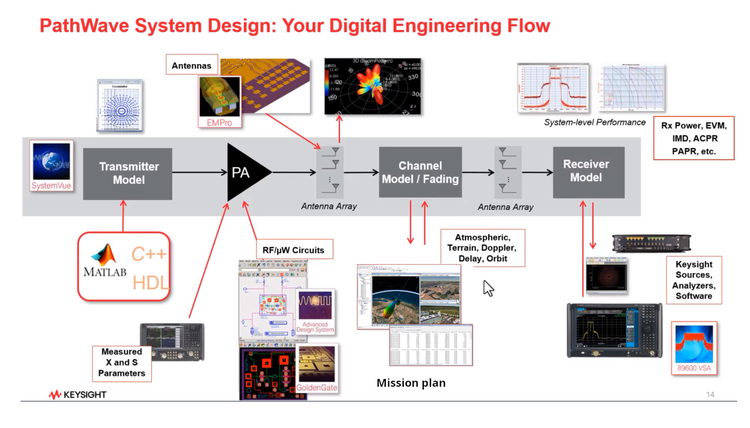
Figure 4. SystemVue integrates other tools for end-to-end SATCOM testing
SystemVue is for end-to-end engineering design workflow management and mission performance testing of your SATCOM systems. It pulls in all the specialized systems into a coherent end-to-end system design and testing platform. It integrates:
- mathematical models of RF subsystems
- simulation models from RF integrated circuit design tools like GoldenGate
- models from phased array design tools like EMPro
- mission requirements and satellite kinematics models from external tools
- measured data from network analyzers
RF designs can be imported as shown below.
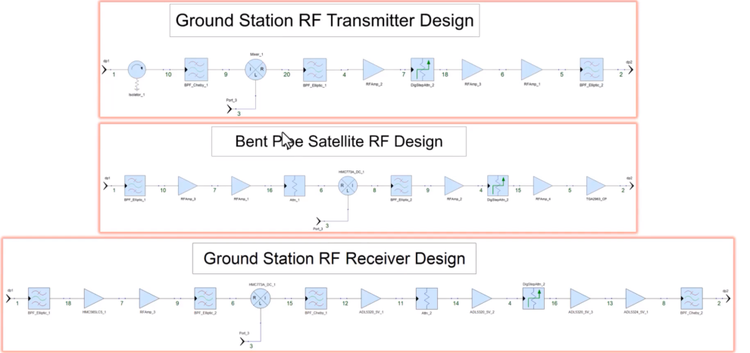
Figure 5. RF designs imported into SystemVue
All these are integrated into coherent end-to-end digital twins that allow realistic system tests and simulations of various operating scenarios. SystemVue characterizes RF behaviors and guides the optimization of link budgets as shown below.

Figure 6. Link budget estimation in SystemVue
PathWave Vector Signal Analysis (VSA)
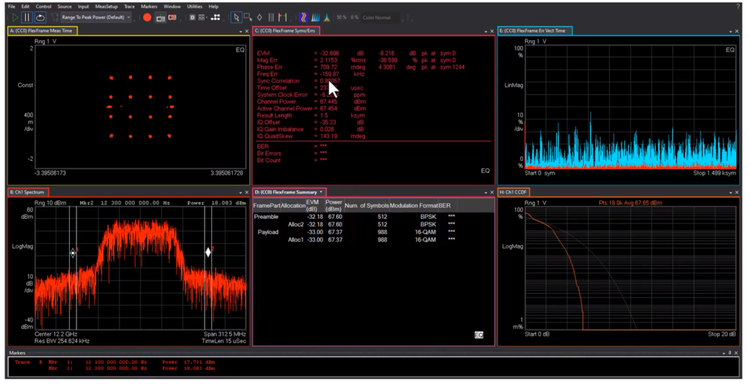
Figure 7. RF characterization results from SystemVue visualized in VSA
PathWave Vector Signal Analysis is a powerful signal analysis software tool to gain deep insights into the frequency, time, and modulation domains of your SATCOM systems. SystemVue seamlessly integrates VSA for powerful visualization and analysis of SATCOM simulation and system test results.
SATCOM verification with Keysight
In this blog post, you gained an in-depth understanding of the RF engineering that goes into satellite communication systems.
Contact us for expert insights into the design and testing of your SATCOM systems.