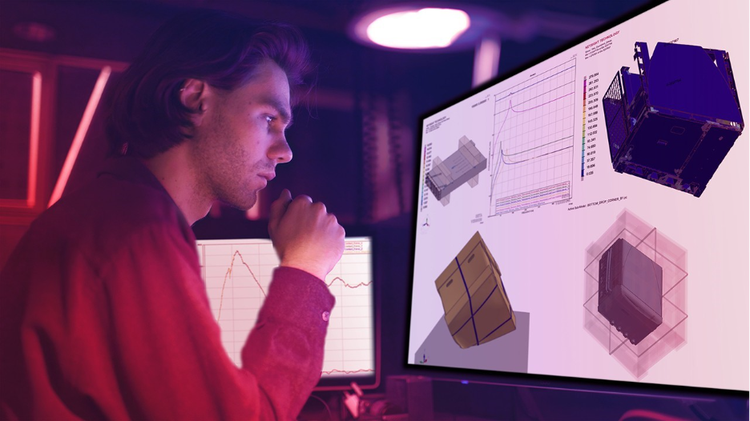
Why Teams Need Virtual Shock Testing Before the First Prototype
The Hidden Cost of Late Shock Failures
It's a familiar story for many product development teams. A new design has successfully completed electrical verification, functional validation, and environmental testing. Everything appears to be on track, until the product enters drop or mechanical shock qualification. By this point, industrial design, tooling, electronics, and manufacturing decisions have largely been finalized.
Suddenly, the development timeline changes. Engineers must investigate the failure, disassemble the product, identify the root cause, redesign affected components, build new prototypes, and repeat qualification testing. What initially appeared to be a single failed test quickly becomes weeks of additional engineering effort, prototype costs, and schedule delays.
Because major design decisions have already been made, even relatively small mechanical changes can become expensive. Engineering teams usually have limited time to evaluate multiple design alternatives, forcing them to implement conservative fixes rather than optimized solutions.
This is why late-stage mechanical shock failures are so costly, they reveal problems when flexibility is at its lowest.

Why Physical Testing Alone Is Not Enough
Physical testing remains the gold standard for product qualification. Whether validating consumer electronics, industrial equipment, medical devices, or packaged products, physical testing is essential for demonstrating real-world performance.
However, it primarily answers only one question:
Did the product survive?
It doesn't always answer equally important questions, such as:
- Why did the failure occur?
- Which components experienced the highest loads?
- How would another enclosure design perform?
- Would a different packaging configuration reduce impact forces?
- Which design modification offers the greatest improvement?
Once physical testing identifies a failure, engineers often need additional investigation to understand the root cause before implementing an effective solution.
Physical qualification confirms performance, but it doesn't always provide the engineering insight needed to improve that performance efficiently.
The Bottleneck
Simulation has long promised to move these insights earlier in development. In principle, engineers could evaluate multiple shock scenarios before building prototypes, identify weak points, and refine designs before entering qualification.
In practice, however, traditional computer-aided engineering (CAE) workflows have often limited that vision.
Setting up an accurate drop or shock simulation can require specialized expertise, detailed material characterization, complex contact definitions, extensive meshing, solver configuration, and significant post-processing. For many product development teams, these workflows remain the responsibility of dedicated simulation specialists rather than everyday design engineers.
As a result, simulation is frequently reserved for only the highest-risk programs or the most critical design questions. Many routine packaging studies, enclosure comparisons, or orientation evaluations simply never get analyzed because the effort outweighs the available engineering time.
The bottleneck is often not simulation capability, but simulation accessibility.
How Guided Virtual Shock Testing Simplifies CAE

Guided virtual shock testing makes simulation more accessible by reducing much of the manual setup traditionally associated with mechanical analysis.
Instead of creating every simulation from scratch, engineers can leverage standardized workflows that include:
- Predefined shock and drop test profiles
- Material libraries for common engineering materials
- Reusable contact definitions
- Structured validation plans
- Automated batch simulations for multiple drop orientations
- Automated report generation
These guided workflows help engineering teams spend less time preparing simulations and more time evaluating product performance.
The goal isn't to replace engineering expertise, it's to streamline repetitive tasks so simulation becomes practical throughout the design process.
From Pass/Fail to Engineering Insight
One of the greatest advantages of virtual shock testing is that it transforms qualification from a simple pass/fail exercise into a powerful design optimization tool.
Instead of only knowing whether a product failed, engineers can understand how impact energy travels through the assembly and where improvements will have the greatest effect.
Virtual analysis allows teams to:
- Identify critical load paths
- Locate areas of high stress and acceleration
- Compare enclosure concepts before prototypes exist
- Evaluate packaging alternatives
- Analyze multiple drop orientations
- Prioritize physical testing based on simulation results
This enables more informed design decisions while reducing unnecessary prototype iterations and laboratory testing.
Rather than replacing physical qualification, simulation helps ensure that physical testing validates stronger designs.
A Practical Example: Packaging Drop Optimization
Packaging design provides an excellent example of how virtual testing improves engineering decisions.
In a recent case study, engineers evaluated the drop performance of a tabletop test device protected by foam inserts. Rather than relying solely on repeated physical drop tests, they used virtual simulation to evaluate the complete matrix of drop orientations and optimize the foam packaging design.
The virtual analysis identified opportunities to improve impact protection while reducing the number of physical iterations required.
Physical testing then confirmed the predicted deformation behavior, demonstrating strong correlation between simulation and real-world results.
This combination of simulation and testing provided greater confidence while shortening the development cycle.


Original Foam Design: High Stress at the grill points
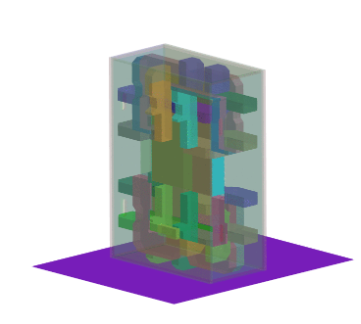

Improved Foam Design: Low Stress
Enter Product Qualification with Greater Confidence
Physical qualification will always remain the final measure of whether a product can survive real-world handling and transportation. Virtual shock analysis is not intended to replace that process.
Its value lies in helping engineering teams arrive at qualification with fewer unknowns.
By evaluating shock performance earlier, exploring more design alternatives, and understanding failure mechanisms before hardware is built, teams can reduce redesign cycles, improve product robustness, and make more effective use of physical testing resources, improving confidence before qualification testing begins.
To learn more visit: Integrated Physics Suite | Keysight
Related Posts