
What Does an Optical Engineer Do?
A Real-World Perspective from Optical Engineers at Keysight
Ask ten people what an optical engineer does, and you’ll likely get ten different answers. The role sits at the intersection of physics, engineering, and system design, but it’s rarely explained in a way that is both accurate and accessible.
To clarify what optical engineers actually do, we spoke with optical engineers at Keysight Optical Design Engineering. Their insights reveal a field that is both technically rigorous and widely impactful—shaping everything from space exploration to everyday consumer devices.
Optical Engineering: Working with Light
At its core, optical engineering is about understanding and controlling light.

As Jeff Hoffman from Keysight explains, “Optical engineers design and develop systems that use light for a wide variety of useful purposes, such as imaging, illumination, sensing, and communication.”
This includes studying how light behaves and applying that understanding using lenses, mirrors, coatings, and other optical components.
While the formal definition is broad, many engineers simplify it when explaining their work. Eric Herman, also from Keysight, puts it succinctly: “I usually explain it in a simple way: I design camera lenses.”
That simple description reflects a core responsibility—designing systems that shape and control light to produce useful outcomes.
Where Optical Engineers Work
Optical engineering spans a wide range of industries, including cameras, AR/VR systems, LiDAR, and fiber optic communication. More broadly, optical engineering appears anywhere light is used to create, measure, or transmit information.
As Herman explains: “It can be everything from really big systems like space telescopes down to your cell phone camera.”
This range—from scientific instruments to consumer electronics—is one of the defining characteristics of the field.
From Modeling to Real Systems
Optical engineering is not just theoretical—it is about building real, working systems.
In practice, engineers:
- simulate and optimize designs
- build and evaluate prototypes
- collaborate across disciplines
As Hoffman notes, optical engineers often “work with simulation software to model and optimize systems, build and test prototypes, and collaborate closely with other engineers.”
This combination of modeling, testing, and teamwork is what turns concepts into functional products.

Figure 3. Modulation transfer function (MTF) of the Mastcam-Z camera computed with CODE V, which indicates close to diffraction limited imaging performance for the short, mid, and long zoom positions. An image taken with Mastcam-Z demonstrate great image quality that matches the MTF analysis results.
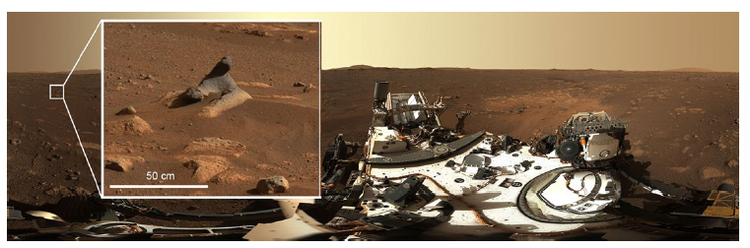
Figure 4. A 360° panorama of the Jezero Crater on Mars taken by Mastcam-Z (Credit NASA/JPL-Caltech/ASU/MSSS).

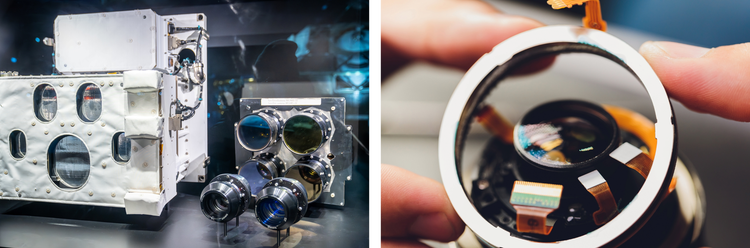
Figure 5. Mastcam-Z lens packaging (Credit NASA/JPL-Caltech/ASU/MSSS)
Real-World Example: Designing for Astronomy
One of the clearest ways to understand the role is through real projects.
Hoffman describes his work on an image slicing system used in astronomy: “Optical Research Associates was hired to develop an ‘image slicing’ optical system… used to map the image produced by a telescope… to better couple light into a spectrometer.”
This system required splitting incoming images and rearranging them for analysis—enabling detailed measurements of astronomical objects.
The project involved several constraints:
- integration into an existing telescope
- operation in a cryogenic environment
- strict tolerance requirements
- simplified manufacturability
This type of work highlights the precision and coordination required in optical engineering.
Optical Engineering Is Everywhere
Optics plays a role in biomedical systems, semiconductor manufacturing, sensing applications, and consumer electronics. It is used not only in final products but also in manufacturing and testing.
Herman emphasizes that optics is often embedded throughout entire systems:
Optical systems are used not only in end products, but also in the processes used to manufacture and test those products.
This means optical engineers contribute throughout the full lifecycle of a system—not just at the final stage.
What Makes the Role Unique
Despite the variety of applications, a common thread runs through all optical engineering work: problem solving.
Designing with light introduces complex constraints—physical, mechanical, and environmental.
As Herman puts it, “At its core, it’s a lot of problem solving.”
This combination of physics, engineering, and iteration makes the field both challenging and rewarding.

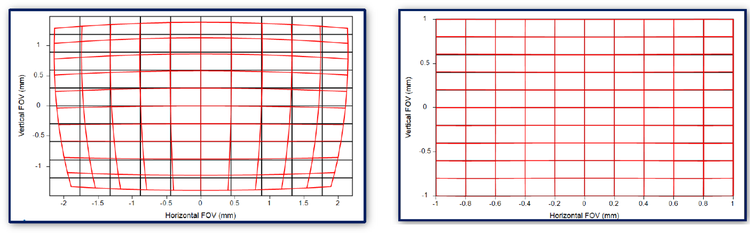


Figure 7. MTF after each optimization stage
Conclusion
Optical engineers design and build systems that control light to enable modern technology. From space telescopes to smartphone cameras, their work influences how we see, measure, and interact with the world.
As R&D engineers at Keysight Optical Design Engineering, Jeff Hoffman and Eric Herman demonstrate that optical engineering is both a rigorous technical discipline and a highly practical, problem-solving profession. Their perspectives highlight the breadth of the field—spanning simulation, system design, and real-world implementation across industries.
Whether you’re exploring career options or deepening your understanding of optical systems, one thing is clear: optics is foundational to many of today’s most important technologies—and continues to grow in relevance.
👉 Want to learn how to get started in optical engineering?
In Part 2, we break down the most common career paths, degrees, and skills needed to enter the field—along with practical guidance on landing your first role.
Related Content
Related Posts