
AI-Driven RF Design: From Scripts to Autonomous Agents
Key takeaways:
- Radio frequency (RF) design using artificial intelligence (AI) is a paradigm shift from traditional, heuristic, trial-and-error approaches.
- Surrogate models based on AI architectures can cut down EM simulation time from hours or days to minutes or seconds.
- The evolution toward Level 5 fully autonomous agentic workflows remains a long-term industry vision, though practical Level 1 and Level 2 integrations are already delivering massive productivity gains.
Traditionally, RF designs are refined through cycles of schematic capture, parameter sweeps, layout generation, and full-wave electromagnetic (EM) simulations. Since EM simulations are computationally expensive, iterations are restricted by time, costs, and hardware constraints. So, there's heavy reliance on experience, intuition, and rule-of-thumb approximations, making it something of a "dark art."
AI fundamentally changes this by using advanced statistical models, deep learning networks, and automated reasoning to explore vast, high-dimensional RF design spaces rapidly. It can model the effects of hundreds of variables on RF behavior, including trace widths, substrate thicknesses, and component values. This enables it to predict circuit behaviors, synthesize layout topologies, optimize component sizing, and accelerate full-wave simulations.
This blog post explains AI-driven RF design trends and benefits.
A roadmap from manual design to autonomous intelligence

Figure 1. Evolution of AI-driven RF design
A maturity roadmap for AI integration into your RF design workflows ensures that human engineers and AI complement each other, leveraging their respective strengths. While AI models and agents carry out design tasks more efficiently than humans can, engineers ensure they follow insights and constraints informed by years of experience and intuition.
This maturity roadmap outlines six levels:
- Level 0 (manual): Engineers interact directly with electronic design automation (EDA) tools through graphical user interfaces (GUIs). Design choices, parameter sweeps, and interpretation of results depend entirely on the individual engineer's expertise and intuition.
- Level 1 (automation): Some tasks are automated. Python or TCL scripts automate repetitive tasks, execute batch simulations, and perform multi-objective optimizations.
- Level 2 (copilots and surrogate models): AI models are introduced to assist engineers with basic tasks such as documentation lookup, analysis setup configuration, and automation script generation. Surrogate models provide fast approximations of complex physics using basic supervised machine learning (ML).
- Level 3 (domain-specific agents): In emerging domain-specific agent workflows, an engineer uses their experience and intuition to communicate goals and constraints to an AI agent through natural language. The agent adheres to them while autonomously orchestrating a sequence of tasks toward those goals. For example, an agent iteratively runs a solver, analyzes the results, and adjusts parameters. The engineer is no longer a manual operator of EDA tools but a strategy director for intelligent design agents.
- Level 4 (agent of agents): In more advanced multi-agent workflows, multiple specialized AI agents collaborate across domains (e.g., schematic, layout, EM, thermal, and packaging). They execute a design workflow largely autonomously but require human intervention at critical verification checkpoints.
- Level 5 (organizational intelligence): These are future, fully autonomous, self-improving agent organizations that can handle the entire design lifecycle from specification to verification. They will help scale institutional domain knowledge and expert insights. Human intervention will be needed only for high-level governance.
Business drivers behind AI-driven RF design
Some of the business and industry factors pushing AI-driven RF design include higher operational frequencies, simulation bottlenecks, high-dimensional optimization, re-spin costs, and talent scarcity.
- Operate at higher frequencies: Major industries like telecommunications, defense, aerospace, and automotive want increasingly higher frequencies, wider bandwidths, and high-speed designs. That increases the complexity of RF engineering, signal integrity, and power integrity.
- Accelerate simulations: Traditional EM solvers can take hours or even days. In industries where time-to-market determines commercial success, AI reduces simulation times from hours or days to minutes or seconds.
- Optimize high-dimensional design spaces: Modern RF circuit design projects, such as multi-band power amplifiers (PAs) and massive multiple-input multiple-output (MIMO) antenna arrays, involve thousands of optimizable variables. Traditional optimization or brute-force parameter sweeps cannot navigate high-dimensional complexity, but modern AI/ML approaches can.
- Avoid hardware re-spins: In radio frequency integrated circuit (RFIC) designs, tape-out failures and hardware re-spins are prohibitively expensive. By using AI to achieve robust, first-pass success through accurate predictive modeling, organizations savemillions of dollars in fabrication costs and months of delayed revenue.
- Overcoming talent shortages: The RF industry is facing a demographic cliff. Highly experienced, senior RF engineers are retiring, taking decades of intuitive insights and domain knowledge with them. Simultaneously, there is a shortage of incoming talent specialized in high-frequency electromagnetics. In these scenarios, AI agents can help capture expert knowledge and elevate junior engineers' productivity.
Foundational technologies enabling agentic RF design
Some of the key technologies underlying agentic RF design are outlined below.
Artificial and deep neural networks
Artificial neural networks (ANNs), such as multi-layer perceptrons and deep neural networks (DNNs), are key building blocks of physics-informed surrogate models for faster simulations. They excel at modeling non-linear behaviors prevalent in RF design, such as power amplifier distortion.
Convolutional neural networks (CNN) excel at spatial pattern recognition. They're frequently used for layout synthesis and predicting EM responses directly from geometrical pixel maps or discretized traces.
These approaches can support RF tasks such as PA and LNA modeling, filter and antenna optimization, layout synthesis, behavioral modeling, and EM model acceleration.
Large language, reasoning, and action models
Large language models (LLMs) are the foundation that enable agents to understand natural-language instructions and coherently generate a wide range of textual content, such as scripts, reports, tabular data, and more. Most LLMs use the transformer architecture, a type of DNN equipped with special blocks called attention mechanisms to process long text sequences (or other sequential inputs) accurately and efficiently.
Large reasoning models (LRMs) extend LLM capabilities with multi-step reasoning, planning, and iterative refinement to address complex goals. They are created by fine-tuning LLMs using reasoning datasets.
Large action models (LAMs) combine reasoning capabilities with the ability to interact with external systems through skills or tools. Agents are generally LAMs with additional domain-specific training or instructions to guide them.
Reinforcement learning (RL)
RL is not a model or architecture, but an approach for training or fine-tuning a model. It's critical to specialized domains like RF design because it enables agents to perceive and act like human engineers.
RL is highly effective for exploring topologies, automated component sizing, and trace routing where explicit labeled datasets do not exist. Through RL, an AI model can organically discover optimal physical structures and steps.
Evolutionary and genetic algorithms
These approaches simulate natural selection to find the fittest solutions in design spaces. They are particularly useful for multi-objective optimization, such as balancing PA efficiency against power consumption, filter size against selectivity, or LNA gain against noise figure.
Gaussian processes
Gaussian processes (GPs) are non-parametric statistical models that excel in low-data regimes by providing predictions along with confidence intervals.
In RF design, Gaussian process regression and kriging are used to create lightweight surrogate models. These models smoothly interpolate complex multidimensional parameter spaces, enabling fast predictions without full-wave simulations for every iteration. They also helpfully output confidence intervals for their predictions. So expensive EM solvers can be activated only when a GP's confidence is low.
Speed as the enabler: The role of surrogate modeling
Surrogate modeling is a crucial building block for AI-accelerated EM simulations. While a full EM solver may take hours or days, a surrogate model is a lightweight, computationally inexpensive approximation that can simulate a parameter combination in seconds or even milliseconds.
To build a surrogate model, the typical steps are as follows:
- An engineer first defines a parameter space relevant to the component being modeled.
- A design-of-experiments algorithm then selects a sparse grid of these parameters.
- A full-wave EM solver simulates these specific grid points.
- The results are used to train an ANN or GP surrogate model.
- The surrogate model can smoothly and accurately interpolate the spaces between the simulated points.
Some illustrative benefits of surrogate modeling from case studies:
- Instead of waiting for overnight batch simulations, designers can receive real-time feedback as they adjust parameters.
- Accuracies can be within 1%-3% of EM simulations.
- ANN surrogate models can run up to 1000 times faster than full EM simulations of RF power amplifiers while achieving comparable prediction accuracy.
- AI-driven surrogate models and layout generation achieved a 30% reduction in area for tunable filters while maintaining or improving performance.
However, surrogate models also have their limitations. They are strictly bound by their training data distribution and cannot safely extrapolate beyond it. If a design optimizer pushes a parameter outside the trained envelope, the model's accuracy degrades rapidly. Their performance also depends on having sufficient, representative simulation or measurement data across the intended design space.
Integrating surrogate models is easy with the right tools. Keysight’s Advanced Design System (ADS) provides native ANN components that enable engineers to map multivariate data into executable simulation models seamlessly, without deep data science expertise.
AI-driven optimization: From parameter tuning to autonomous search
Using techniques such as RL and Bayesian optimization, AI models can autonomously search for optimal parameters in high-dimensional spaces.
This is unlike traditional RF design optimization, which requires an engineer to provide a good initial starting point based on their intuition. The optimization algorithm then walks down the parameter space slope to find the nearest minima. If the initial guess is poor, the algorithm becomes trapped in a local minimum, yielding a suboptimal design.
Capturing engineering knowledge at scale
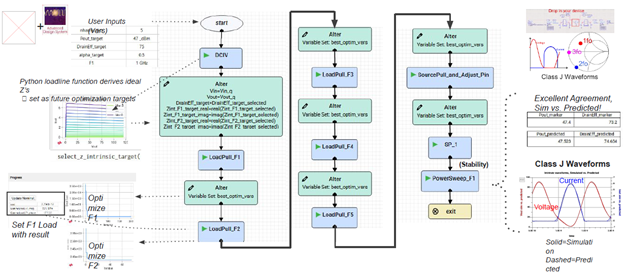
Figure 2. Existing design knowledge is captured through programmatic workflows
AI models are only as good as the data and the procedural logic they are trained on. To address this, the industry is adopting structural frameworks that formalize engineering knowledge.
The capture-accelerate-orchestrate framework is an operational methodology that establishes a pipeline for organizational intelligence. It is enabled by capabilities such as Nexus Connect within platforms like Keysight’s RFCircuit Simulation Professional.
The framework works as follows:
- Capture: The first step is digitizing human intent. Rather than relying on a senior engineer's unrecorded GUI clicks, design procedures are captured in Python scripts or executable flowchart whiteboards. For example, using Keysight PathWave Data Tools, a disparate array of measured load-pull data can be visually cleaned, aligned, and structured.
- Accelerate: The standardized data is fed into ML training loops to generate surrogate models. This extracts fast, continuous mathematical behaviors from sparse, historical measurements.
- Orchestrate: The resulting models are deployed back into the EDA environment. Complex workflows are orchestrated programmatically, integrating schematic capture, EM simulation, and thermal analysis into a single automated pipeline that anyone in the organization can execute.
The integration of Python automation and natural language assistants into ADS builds a critical bridge between proprietary EDA tools and the open-source AI ecosystem, including bring your own model (BYOM) capabilities. Engineers can now use Github Copilot and other software coding agents so that designers can connect coding intelligence directly with Keysight ADS.
This structured capture of knowledge is the prerequisite for trusting autonomous agents.
Skills and agents: Building blocks of autonomy

Figure 3. Hierarchy of agents, skills, and scripts
Agents and skills provide increasingly flexible ways to execute engineering tasks using natural language instructions.
To understand them, we must first differentiate between scripts, skills, and agents.

Figure 4. Agents, skills, and scripts
A script is a rigid, deterministic code sequence designed to execute a specific task under specific conditions. Crucially, a script does not understand or know the engineer's goal or intent. It is merely a translation of that intent into a set of steps for a computer.
A skill is a more intelligent capability that can accept vague inputs or natural language instructions in a specific domain (e.g., "extract S-parameters" or "mesh a layout") and execute them. A skill may use multiple scripts.
An agent is an AI model built upon a LAM/LRM/LLM that can perform complex reasoning, understand semantic goals, dynamically select the appropriate skills, and sequence them in novel ways to solve complex design problems.
Keysight provides several building blocks for your AI-driven RF design roadmap.
The Keysight EDA Tool Assistant (CoPilot) is an intelligent, prompt-driven system designed to streamline and automate simulation and analysis within the ADS environment.
The Keysight EDA Learning Assistant (Chat) is a generative AI solution that provides quick, context-aware answers to product-related questions while you work with Keysight ADS. It is trained on the latest ADS product documentation, knowledge base articles, Python API content, and YouTube videos.
Multi-agent workflows: Scaling RF design beyond human limits

Figure 5. Level 4 — agent of agents
In multi-agent workflows, a central orchestrator agent breaks a massive engineering problem into sub-tasks and delegates them to more specialized domain agents, such as an RF circuit design agent, a layout agent, an EM agent, and a thermal agent. These agents collaborate, iterating designs back and forth until the global constraints are met.
For example, Sphere Semi is developing an all-AI analog and mixed-signalRFIC design flow that rapidly generates hundreds, even thousands, of designs in the time it takes humans to create one and achieves first-pass chip fabrication success. Their agentic AI system autonomously generates, evaluates, and iterates on designs without human intervention at each step, unlocking performance otherwise unimaginable in human-centric workflows. It integrates with Keysight ADS and its programmatically callable RF schematic, circuit, and electromagnetic simulation tools.
Unchecked, generative AI systems can produce hallucinations or otherwise unreliable outputs. To mitigate them, rigorous validation protocols must be enforced to “ground” such models in real physical constraints, such as passivity for electromagnetic surrogates. This is especially true for Multi-agent workflows, whose overall results must also pass these cross-validation tests; for example feeding a proposed AI-based schematic back into a high-fidelity ground-truth solver such as Keysight RFPro or Nexus.
Additionally, fabrication and process-constraint validations, such as design rule checks and layout-versus-schematic, must remain hardcoded into the pipeline.
The AI may propose the design, but the deterministic physics engines still need to validate it as a buildable, working candidate. Human judgment remains critical for defining the initial boundary conditions and providing final sign-off for critical fabrication steps that involve risk, schedule & budget, and external commitments.
Level 5 vision: The self-improving RF design organization

Figure 6. Level 5 multi-agent orchestration
At Level 5, an autonomous multi-agent workflow will handle the entire lifecycle within a specific bounded RF design domain. The system proposes a design, simulates it, coordinates fabrication requirements, tests the resulting hardware in the loop, ingests the measured data, updates its own surrogate models, and improves its algorithms for the next cycle, all with verifiable governance.
In the future, generative AI will be used to discover entirely novel circuit topologies. Techniques analogous to image diffusion models or large sequence models are being researched to synthesize netlists from scratch, exploring circuit architectures that break away from traditional human designs.
Secondly, future solvers will seamlessly intertwine ML and physics. Physics-informed ML models will embed Maxwell’s equations of electromagnetic fields directly into the neural network architecture, enabling the model to learn from data while strictly obeying the physical laws of electromagnetism. They could also replace traditional finite-element method meshing for certain problems.
However, there are significant obstacles to Level 5 autonomy:
- Data scarcity: For emerging technologies, such as high-frequency Gallium Nitride, Indium Phosphide, or novel RF complementary metal-oxide-semiconductor (CMOS) processes, AI training data is scarce and highly proprietary, limiting model coverage to narrow use cases.
- Modeling highly nonlinear behaviors: Even AI models struggle with chaotic, highly discontinuous nonlinear RF behaviors, such as wideband memory effects and complex harmonic generation under varying thermal states.
- Lack of explainability: If an AI proposes a highly unconventional RF layout, it may not be able to explain why it works in ways that a human engineer can intuitively grasp. This lack of explainability breeds distrust in mission-critical applications, such as aerospace and automotive radar.
- Surrogate model drift: Without continuous recalibration against physical measurements, surrogate models can suffer from concept drift. Designers optimize designs against their flawed mathematical approximations rather than physical reality.
- Integration challenges: Connecting legacy EDA databases, proprietary process development kits, multiple solvers, and manufacturing data into a unified AI-readable ontology remains a massive challenge.
To mitigate these risks, organizations should use AI for rapid pre-optimization and initialization to narrow the design space significantly but always default to traditional EDA solvers for final verification and sign-off. Integrating AI must be a stepwise journey, proving reliability at Level 2 before entrusting agents with autonomy at Level 4 and above.
From tools to teammates with Keysight AI-driven RF design solutions
As the industry advances along the maturity curve toward Level 5 agentic solutions, tools like Keysight’s ADS and its AI copilots are bridging the gap between legacy methodologies and the autonomous RF design workflows of the future. By maintaining rigorous validation protocols and acknowledging the limitations of current machine learning models, RF organizations can safely embrace AI.
Agentic AI is on the path to becoming intelligent, autonomous teammates capable of navigating the extreme complexities of next-generation wireless technology, with guidance from human engineers.
Contact us to help your teams navigate this exciting future of AI-driven RF design.
Related Posts