
6G Network: Get Ready for a Mobile Communications Revolution
Key takeaways:
- 6G is the next-generation wireless communication technology set for rollout in 2030.
- 6G is expected to have breathtakingly high data rates, ultra-low latency, and high reliability.
- Artificial intelligence (AI) and machine learning (ML) are expected to be in a symbiotic relationship with 6G in the future. They would likely be essential to the working of 6G networks but also rely on 6G to realize exciting new applications.
Are your engineers and customers ready for a future where smartphones transmit at terabits per second, enable worldwide connectivity in even the most remote locations, and make science-fiction-like holographic telepresence an everyday reality?
In this blog post, find out how 6G networks are promising this exciting future, how they'll probably work, and how AI is expected to enable their extreme performance.
What is a 6G network, and how might it work?
Sixth generation (6G) is the term for the next major leap in mobile wireless networks after 5G networks and 5G-Advanced networks. The envisioned features for this next-generation technology include:
- extreme mobile broadband performance, possibly with terabits-per-second (Tbps) high speeds, microsecond latency, and ultra-high reliability
- new ultra-wide frequency bands in the mid band of 7 Gigahertz (GHz) to 20 GHz, millimeter-wave (mmWave) bands (30 GHz to 100 GHz), and the sub-Terahertz (THz) and THz bands (100 GHz to 10 THz)
- AI-enabled network technologies, with artificial intelligence and machine learning expected to be embedded in many operations
- ubiquitous connectivity and coverage
- interoperability with all previous generations
Briefly, a 6G network will probably consist of the following subsystems:
- Radio access network: This would be the wireless technology part with all the network elements communicating over radio frequencies.
- Core network: The RAN would demodulate the voice or data from radio signals and forward it to the core network, which would consist of customer lookup databases, switches to route calls, and routers to connect to external networks like the internet.
- Transport network: This would connect the RAN and core network, as well as components within them. It would comprise fiber optic cables, microwave links, IP routers, and switches.
- Operations and maintenance: This would be the ecosystem of software and systems used to configure and monitor the RAN, core, and transport networks. It would perform network management functions like configuration, fault, performance, security, and accounting.
When will 6G networks be available?

Figure 1. 6G timeline
Commercial 6G network rollout is expected in 2030 in most countries.
The International Telecommunication Union (ITU) published its vision for 6G in 2023.
Based on this vision, the Third Generation Partnership Project (3GPP) will work on 6G studies as part of Release 20 and Release 21 (2025-2027).
The core 6G standards are expected to come out in 2028-2029 as part of Release 21. They will enable research and development of standards-compliant 6G hardware and devices by 2030.
How fast will 6G networks be?
The envisioned parameters for 6G are outlined below:
- Peak data rates might reach 200 gigabits per second (Gbps) to several Tbps in the THz bands. Consumers could enjoy 300-500 megabits per second (Mbps) on average.
- Latency is expected to be very low — 0.1 milliseconds (ms) for the air interface, 1 ms end-to-end in industrial environments, and a few ms for cellular vehicle-to-everything (V2X).
- Device densities of 1 million to 100 million devices per square kilometer (km) could be possible.
- Mobility speeds of 500-1,000 km per hour are envisioned, enabling 6G for aircraft, drones, and high-speed trains.
What are the applications of 6G technology?
Let's look at some of the exciting future applications that 6G networks could unlock.
- Autonomous mobility: The ubiquitous presence and lower latency of 6G could enable safe autonomous mobility and reliable real-time vehicle-to-everything (V2X) collaboration.
- Autonomous drones: The high data rates and worldwide availability of 6G networks could expand the use of drones for critical operations like rescue missions, logistics, environmental monitoring, and defense.
- Industrial internet of things (IoT): Private 6G networks could enable smart factories where operations are automated using thousands of IoT sensors and robotic vehicles.
- Holographic telepresence: The high data rates of 6G could allow realistic high-resolution virtual avatars of people to be shown on 3D holographic displays for face-to-face communication and presentation.
- Immersive experiences: Extended reality technologies like virtual reality (VR), augmented reality (AR), and mixed reality (MR) could become ubiquitous through 6G-enabled devices like AR glasses for e-sports, gaming, and entertainment.
- Advanced health care: For advanced health care like robotic surgeries, 6G networks promise to be highly reliable and always available with built-in redundancies.
What is an AI-enabled 6G network, and how could it be different from 5G?
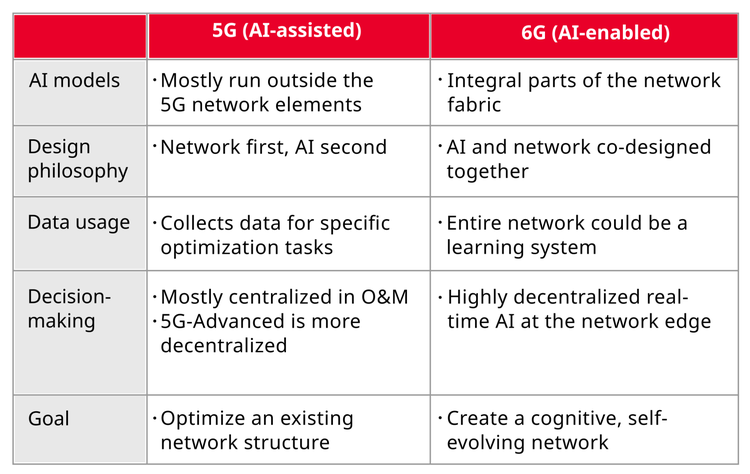
Figure 2. 6G vs. 5G approaches
6G is called AI-enabled or AI-native because AI is expected to be foundational to even its most basic operations, unlike 5G, where AI is bolted on to optimize some network functions. The contrasts between 6G and 5G design philosophies are illustrated in the table above.
In 6G networks, much of the architecture, protocols, and functions could be powered by AI-driven intelligence and optimizations. Some possible technical differences between 6G and 5G are shown below.

Figure 3. 6G vs. 5G technical differences
We explore these expected uses of AI in 6G networks in the next section.
How could AI shape the development and optimization of 6G networks?
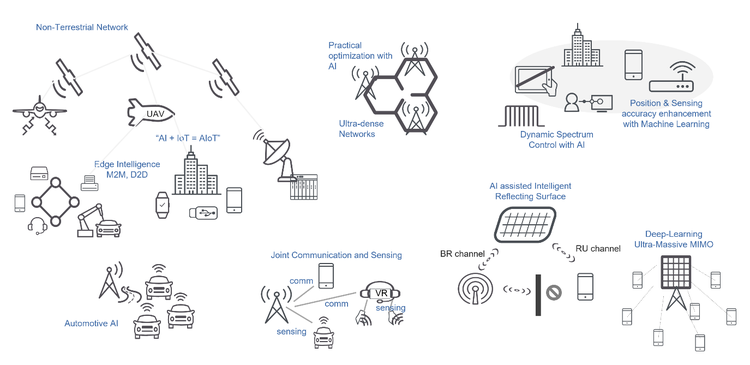
Figure 4. AI integration across 6G networks (Image source: How to Revolutionize 6G Research With AI-Driven Design)
In this section, we go into the technical details of how AI could automate 6G communications and network operations, autonomously manage resources, and enable self-healing and predictive maintenance.
AI-powered ubiquitous 6G

Figure 5. Cell-based architectures of earlier generations vs. possible cell-free 6G architecture
All previous generations of mobile networks divided coverage areas into hexagonal cells. The cell edges have always been zones of interference, poor reception, handover glitches or delays, and other problems.
But 6G envisions fully cell-free architectures, a true paradigm shift in mobile telecom design. A cell-free network could consist of many small, low-power, distributed access points (APs), which are essentially antennas with some basic AI-driven radio frequency (RF) processing. All the APs would be connected to a central unit.
When sending data to user equipment (UE), the central unit could use AI to select nearby APs that transmit together coherently to combine into a precisely aimed beam. When a UE sends data, several nearby APs could receive partial signals and forward them to the central unit to reconstruct the data using AI. The AI-based coordination of APs would enable seamless 6G availability without typical handover glitches.
Non-terrestrial networks (NTNs), introduced in the 5G standards for worldwide availability, could be more advanced in 6G. AI/ML could enable more efficient resource allocation and parameter optimization in constantly changing satellite-to-ground conditions.
AI-enabled radio access network (RAN)
AI/ML models could optimize and dynamically adapt the entire RAN in real time as traffic, network, and environmental conditions change.
AI-enabled air interfaces
Air interfaces specify the analog RF aspects and the digital aspects (like protocols) of wireless communications between:
- UE like smartphones and VR glasses
- 6G tower components, like base stations
- non-terrestrial network elements like unmanned aerial vehicles and satellites
These interfaces traditionally have manually designed signal processing blocks with limited configurability and many simplifying assumptions.
In 6G networks, the air interfaces are expected to be AI-enabled. At both ends, neural transceivers could run powerful ML models that would be highly configurable, modifiable, adaptive to dynamic conditions, and capable of factoring in all influencing variables. They could reduce pilot signals, eliminate cyclic prefixes, and ease synchronization.
AI-powered beamforming
AI could be crucial for predicting optimal beamforming directions and dynamically creating lean modulation schemes based on real-time, complex channel conditions to optimize spectrum sharing and energy efficiency. Specifically, AI could explore vast solution spaces to find optimal beamforming weights for multiple users in ultra-massive multiple-input multiple-output (UM-MIMO) deployments.
AI-driven waveforms and modulation
AI could design novel 6G waveforms and modulation schemes instead of using traditional analytical models. The models would dynamically learn and select modulation schemes based on real-time channel conditions.
AI-optimized channel estimation and state

Figure 6. Channel estimation with supervised learning (Image source: How to Revolutionize 6G Research With AI-Driven Design)
In 6G networks, deep neural networks could learn the more realistic nonlinear relationships between received signals and channel responses, outperforming traditional linear estimation techniques.

Figure 7. Unsupervised learning in a two-sided model for CSI feedback (Image source: How to Revolutionize 6G Research With AI-Driven Design)
Highly compressed channel state information (CSI) feedback would be crucial for UM-MIMO in sub-terahertz bands. However, the training data needed for designing it would not be available until the customer trial phases. Even then, the training data is likely to be sparse. This can be overcome early by using two-sided unsupervised learning with coordination between UEs and base stations.
ML-based positioning with centimeter-level accuracy
6G envisions positioning with centimeter-level accuracy, which would be crucial for autonomous vehicles, robotics, and smart factories. This could be achieved by AI/ML models using fingerprinting based on channel observations, identifying non-line-of-sight conditions, and refining timing or angle measurements.
Integrated sensing and communications (ISAC) optimization
ISAC means 6G radio resources would be used not just to communicate but also to actively sense the network's surroundings. AI could facilitate:
- complex signal processing needed for ISAC
- real-time data analysis for critical use cases like collision avoidance
- spectrum sharing without interference between communication and sensing tasks
- predictive failure analysis in ISAC systems
Holistic energy efficiency
In 6G networks, AI could optimize network power consumption at city-wide and even larger scales for holistic sustainability. AI models could dynamically switch off entire base stations and reconfigure resources based on real-time demand while optimizing energy use.
How could 6G networks be co-designed with AI to enable intelligent, self-optimizing infrastructure?

Figure 8. 6G key technologies and how AI might impact them (Image source: The Integration of AI and 6G)
All trends point toward 6G and AI co-evolving in close symbiosis over the coming decade. 6G will probably not be a dumb data pipe but actively use AI to adapt, learn, and optimize itself. Simultaneously, 6G could unlock exciting AI-driven use cases as outlined below.
Intelligent networks
A 6G network could be a massive, distributed AI model that is constantly sensing, adapting, and improving itself over time. It could self-organize, self-optimize, and self-heal with the help of AI/ML models.
Self-organization means a network is expected to dynamically reconfigure its components to meet changing environmental conditions and service requirements.
Self-optimization would involve AI/ML continuously analyzing network traffic and automatically reallocating resources (like bandwidth and power) where they are most needed. Not only could AI optimize a 6G network (AI for network slicing), but the network too could efficiently support emerging AI services (slicing for AI). The network could provide the necessary connectivity, computing, and data resources for AI applications to function seamlessly.
Self-healing means AI/ML models would autonomously detect, diagnose, and recover from network impairments. For example, they could predict demand spikes to prevent congestion and optimize data routing for ultra-low latency.
Real-time digital twins
To be effective, digital twins for 6G networks, other systems, and processes could rely on both AI and 6G. The high data rates of 6G might become essential for transmitting the massive data needed for real-time mirroring. AI might become essential for reconstructing virtual models from that massive data. Conducting experiments on the digital twin of a 6G network or other systems might also require AI/ML.
Pervasive edge computing
6G's high data rates and network architecture could facilitate new ways of running AI models that were inconvenient before. These could include distributed learning, federated learning, and online learning. These advanced deployments could, in turn, dictate how AI concerns — like training data, inference, weights, and gradient updates — could be handled in 6G PHY, protocols, and edge devices.
ISAC operations
ISAC could be used to create detailed, real-time, dynamic maps of a network's environment. Processing the high volumes of sensing data could require AI. In turn, these maps would allow AI to realize use cases that were previously impractical, such as autonomous vehicle convoys and smart cities.
Semantic communication
With AI's help, 6G networks could understand the meaning or intent behind the data they're pumping. For example, for a video call, instead of sending every pixel, it can send a "person A is now saying: ..." message.
At the other end, generative AI could realistically reconstruct video frames corresponding to the speaker's lip movement. This complete re-imagining of communication, driven by a co-design of 6G and AI, could save massive amounts of bandwidth for service providers and consumers.
How could AI accelerate the design validation process for 6G networks?
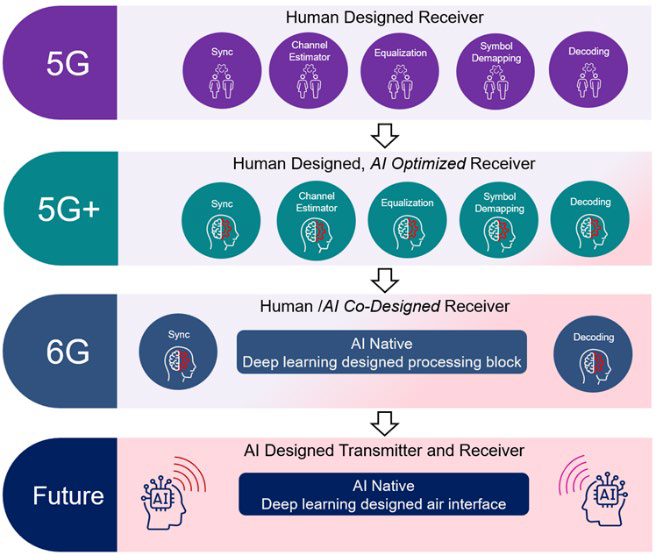
Figure 9. How AI could change the air interface design (Image source: The Integration of AI and 6G)
AI/ML models could expedite the design, validation, and qualification of 6G networks and components. They could enable faster prototyping of complex 6G components and protocols, reduce simulation time, optimize test coverage, and streamline many other development and test workflows. Let's understand how.
AI-driven digital twins for 6G networks
AI could create realistic virtual models of an entire 6G network. Engineers could use them to test new protocols and hardware designs in realistic simulations at a fraction of the cost and time needed for physical prototypes.
AI-accelerated simulations
Closed-form physics-based models can be very accurate and thorough, but:
- support only limited network complexity
- involve many simplifying assumptions
- require custom software development
- take several hours or days to complete
In contrast, AI/ML could model complex phenomena even for dense networks. Examples include:
- radio wave propagation in dense urban areas
- channel estimation and channel state information
- performance of ultra-massive MIMO
AI could also offer a variety of architectures and hyperparameter optimizations to balance between fast performance, good explainability, and high accuracy.
Comprehensive training and test data generation
Generative models, large reasoning models, and regression models could generate comprehensive data for training AI models and testing different scenarios.
For example, generative adversarial networks could synthesize massive amounts of realistic wireless channel data to test AI model behaviors in different real-world scenarios.
Intelligent test coverage
Instead of running millions of random tests, AI could identify the most critical or likely-to-fail scenarios, ensuring better validation with fewer tests. By combining AI models for test execution with digital twins, automated test suites could be developed for different dynamic conditions.
Dynamic AI algorithms
AI could help design and validate algorithms for complex operational aspects, like beamforming and interference management, before they are coded into hardware. Keeping the model weights in rewritable storage or non-volatile memory would enable models to be dynamically updated as new data and tests improve their metrics.
What are Keysight's solutions for 6G?
Keysight is pioneering 6G research and provides comprehensive technology solutions for communication service providers, mobile network vendors, and device manufacturers.
Our 6G testing solutions include hardware and instruments for 6G vector analysis, sub-THz testbed, NTN satellite emulation, and end-to-end network design using system modeling software.
Our AI technology solutions address the design and validation of AI models and chips.
Our AI data center solutions enable 6G pervasive edge computing through:
- testing solutions for AI compute
- design of data center power management
- validation of data center networking and interconnects
Streamline your 6G network with Keysight
In this blog post, you got an overview of 6G networks and explored how AI could be used in their operations.
Contact us for deep insights and expertise into all things 6G.